Clear explanations of OPC, industrial data architecture, device protocols, OT security, and Industrial AI, all in one practical resource.
You already know how to run a plant. You should not have to assemble a working definition of OPC UA, Sparkplug B, or the Purdue Model from a standards document, a vendor page, and an old forum thread.
The challenge is not that industrial teams cannot understand these concepts. The challenge is that the explanations are scattered, written for different audiences, and often shaped by different assumptions. That slows down research, complicates architecture discussions, and makes it harder for operations and IT to reach the same conclusion.
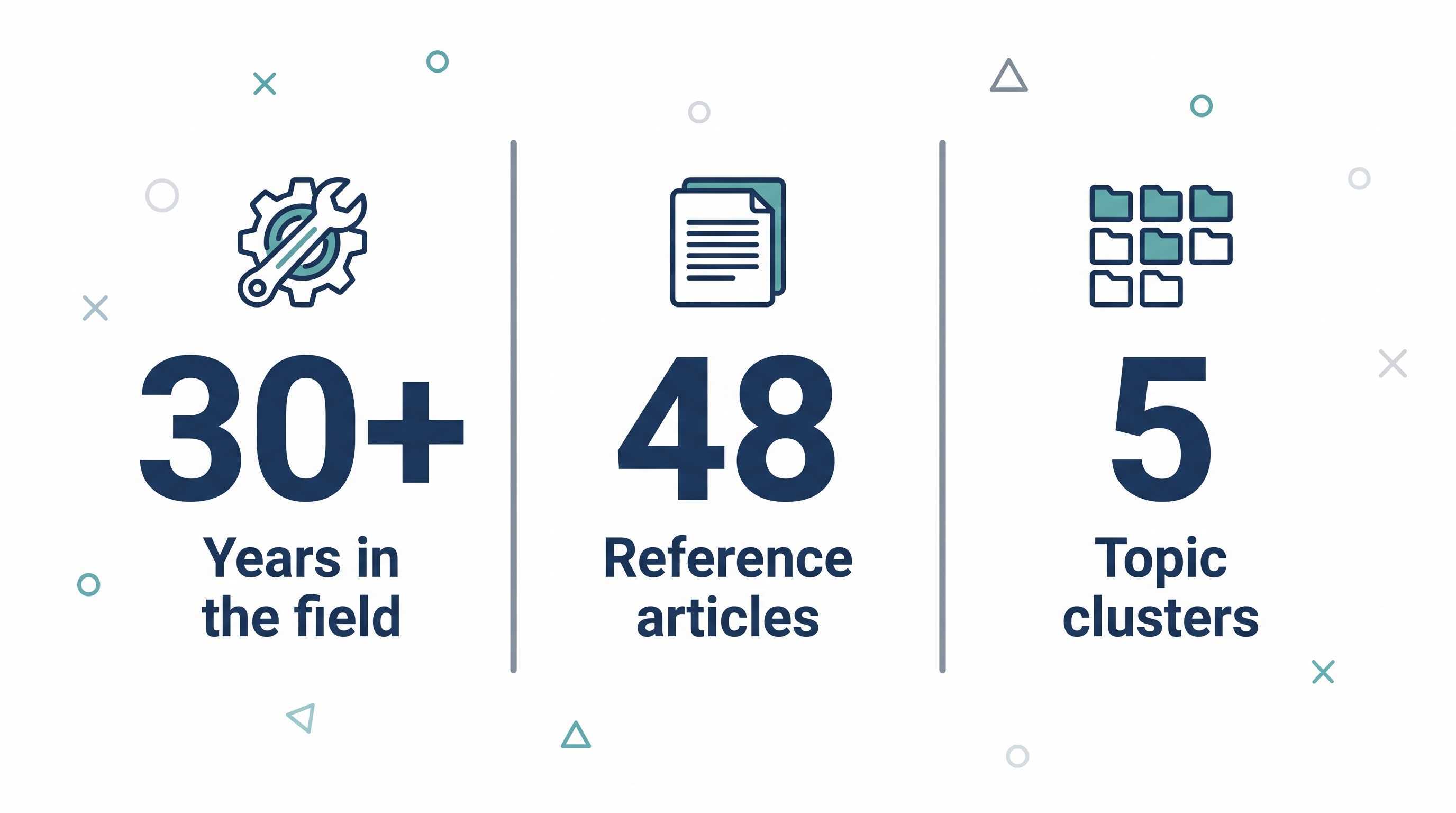
Software Toolbox created a technical glossary of 48 reference articles to give industrial teams a more useful starting point. The articles are organized into five topic areas, written in plain language, and informed by more than 30 years of industrial connectivity experience.
Browse the complete glossary at softwaretoolbox.com/resources
Why a Shared OT Vocabulary Matters
Automation projects cross organizational boundaries. Controls engineers think in terms of tags, scan rates, drivers, and protocols. IT teams think about brokers, certificates, data models, identity, and network zones. Business leaders focus on visibility, analytics, scalability, and return on investment.
Every perspective may be valid, but problems begin when teams use the same term to mean different things. A shared technical reference helps people clarify requirements, compare architectures, evaluate recommendations, and explain decisions without spending the first half of every meeting aligning vocabulary.
What You Will Find in the Glossary
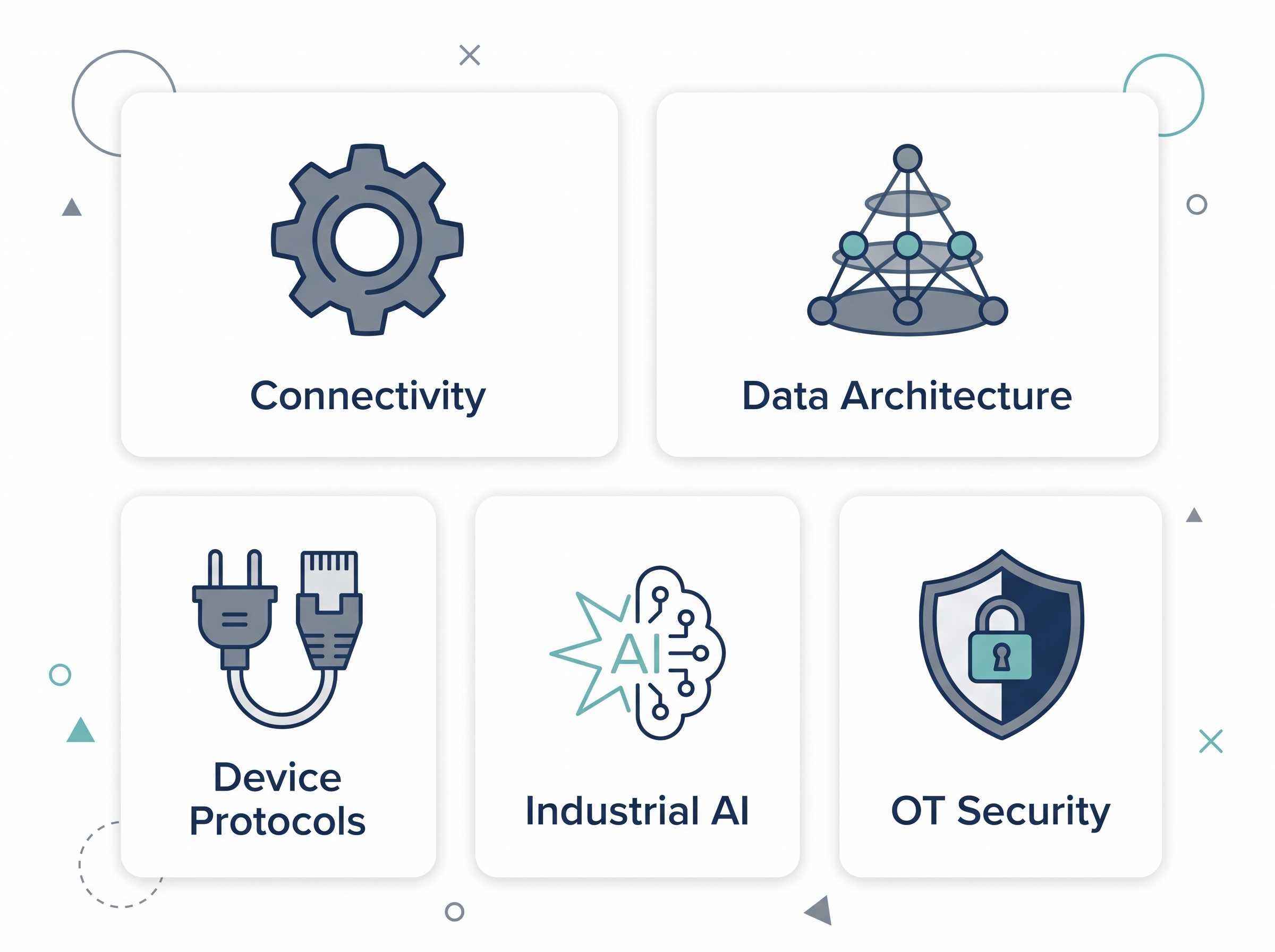
The glossary is organized into five practical areas. Start with the layer closest to your current project, then follow the related concepts to understand how the rest of the architecture fits together.
OPC, Industrial Connectivity and HMI Tools
This is the foundation for understanding how industrial applications exchange data. The glossary explains OPC DA, OPC UA, OPC HDA, OPC A&E, DCOM, DDE, ActiveX, and the client and server model behind many connectivity decisions.
These explanations are especially useful when a plant contains both legacy and modern systems. They help teams understand why OPC Classic technology may still be present, where DCOM creates operational friction, and when OPC UA offers a more secure and platform independent path forward.
Start with:
- What is OPC? The entry point for the entire topic area.
- What is OPC UA? A practical explanation of the modern, platform independent OPC architecture.
- What is an OPC server? The role an OPC server plays between industrial devices and software applications.
Industrial Data Architecture
Collecting data is only the beginning. The greater challenge is moving it reliably, adding context, and making it useful to the systems and people that need it.
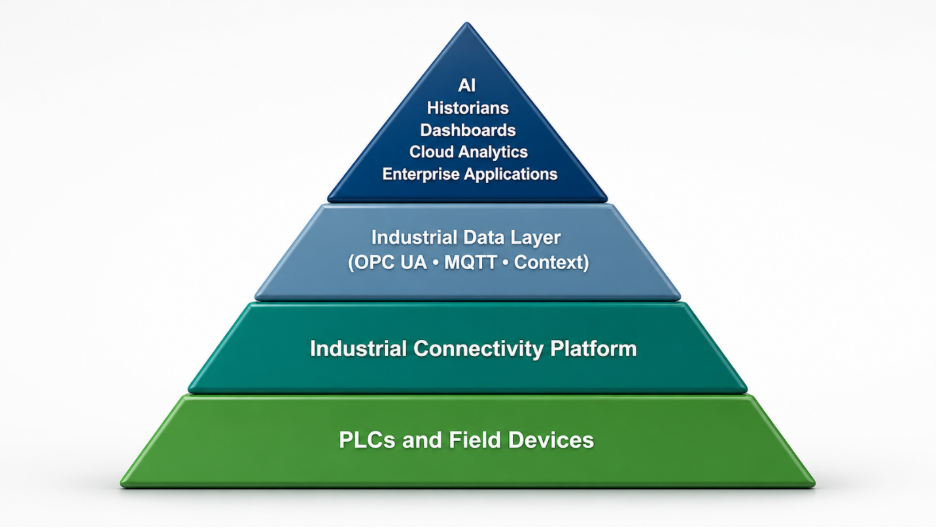
This area explains the Unified Namespace, MQTT, Sparkplug B, historians, edge computing, data contextualization, the Purdue Model, and the path from the plant floor to enterprise and cloud applications. Together, these concepts help teams design an architecture instead of accumulating disconnected data projects.
Start with:
- What is a Unified Namespace? A clear introduction to a shared, real time industrial data model.
- What is edge to enterprise in industrial automation? The path that carries operational data from field devices to business and cloud systems.
- What is IT/OT convergence? Where the two disciplines meet, why communication breaks down, and how teams can work more effectively together.
Industrial Device Protocols
Most plants operate equipment from several manufacturers, often installed across several generations. The result is a mix of protocols that were designed for different devices, industries, and communication requirements.
The glossary covers Modbus, EtherNet/IP, PROFIBUS, PROFINET, DNP3, BACnet, IEC 61850, and major vendor protocol families. These overviews do not replace a device manual. They help you understand which manual to open, which questions to ask, and where a communication problem is most likely to occur.
Start with:
- What is an industrial device driver? How software translates a device protocol into usable data.
- What is Modbus? An overview of one of the most widely used protocols in industrial automation.
- What is EtherNet/IP? The industrial Ethernet protocol commonly used in Rockwell Automation environments.
OT Cybersecurity
Industrial connectivity creates value only when it is designed with security in mind. OT cybersecurity must account for availability, safety, network segmentation, secure remote access, authentication, certificates, and the long service life of industrial assets.
The glossary introduces OT cybersecurity fundamentals, ICS and SCADA security, frameworks such as NIST and IEC 62443, and the role of the industrial DMZ. These explanations give operations and IT teams a common foundation for discussing risk, access, and data flow.
Start with:
- What is OT cybersecurity? The core principles and risks that distinguish industrial security from enterprise security.
- What is ICS/SCADA security? Common attack paths and the frameworks used to reduce industrial risk.
- What is an industrial DMZ? How an industrial DMZ separates network zones while allowing approved data to move safely.
Industrial AI
Industrial AI begins long before a model is trained. It begins with data that is trustworthy, time aligned, contextualized, secured, and accessible.
The glossary connects AI initiatives to the industrial data foundation beneath them. That perspective helps teams assess whether their architecture can provide the context an AI application needs before they invest in a use case that the available data cannot support.
Start with:
- What is data contextualization? Why raw values need equipment, process, and operational meaning before people or models can use them effectively.
 Why This Resource Is Different
Many technical pages explain a concept only through the product being promoted. The Software Toolbox glossary takes a more useful approach. Each article begins with the concept, explains where it fits, and then identifies relevant products when that context can help the reader continue the evaluation.
The glossary also uses clear content labels so readers can choose the right level of depth. Foundational articles introduce the topic. Intermediate articles build on the basics. Start here articles provide an entry point into a larger subject. Architecture and Networking labels identify content focused on system boundaries and data flow.
The result is a resource that supports technical research first while still helping readers connect concepts to practical implementation options.
Five Ways to Use the Glossary
- Prepare for a vendor or integrator meeting. Review the relevant concepts before the conversation so you can evaluate recommendations and ask more precise questions.
- Onboard a new engineer or IT partner. Use the foundational articles to build a consistent understanding of the systems and terminology they will encounter.
- Plan an architecture. Agree on working definitions for edge computing, Unified Namespace, industrial DMZ, and data contextualization before comparing products or drawing system boundaries.
- Support an inherited system. Get oriented on an unfamiliar protocol or legacy technology before changing a configuration or beginning detailed troubleshooting.
- Build a business case. Use clear explanations to connect a technical initiative to operational value, risk reduction, scalability, and long-term supportability.
Built From Real Industrial Experience
Software Toolbox has focused on industrial connectivity since 1996. That experience shapes the details a generic explanation often misses, including why OPC DA remains common, why DNP3 is widely used in utilities, why the industrial DMZ sits between enterprise and control networks, and why data context matters as much as data collection.
Those details help readers move beyond a definition and understand the operational reason the technology exists.
Where to Start
Choose the path that best matches the problem in front of you:
- New to industrial connectivity? Start with What is OPC? and What is an OPC Server?
- Designing a modern data architecture? Start with What is a Unified Namespace? and What is edge to enterprise in industrial automation?
- Connecting field devices? Start with What is an industrial device driver? and What is Modbus?
- Securing the plant floor? Start with What is OT cybersecurity? and What is an industrial DMZ?
- Evaluating an Industrial AI initiative? Start with What is data contextualization?
From there, filter the glossary by topic and follow the related articles as new questions appear. You can work through an entire subject area or return to the explanations when a project needs them.
Make Better Decisions from a Shared Foundation
Good architecture decisions begin with good understanding. Teams that share clear definitions for OPC, data architecture, protocols, security, and AI can move faster and avoid expensive misunderstandings.
The Software Toolbox glossary will not design your system for you. It will help ensure that when your team sits down with a vendor, an integrator, or another department, everyone begins the conversation with the same accurate understanding of the terms on the table.
Browse the full OT Technology Glossary
Ready to move from concepts to a specific application? Talk to an engineer.