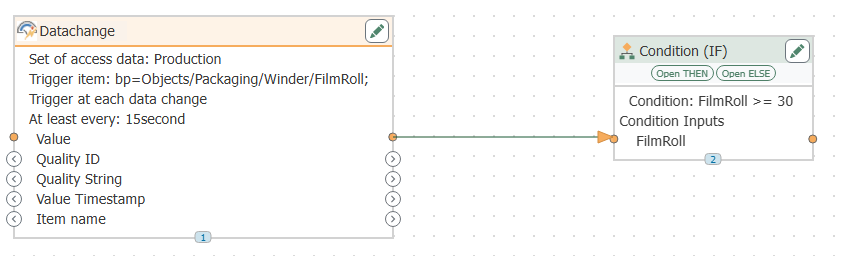
System integrators’ OPC Router deployment is an industrial data integration project with the aim of connecting operational data to applications without weakening plant security or creating an unmaintainable handover. This 2026 guide to OPC Router for system integrators focuses on architecture, configuration requirements, failure testing, and customer acceptance—not just establishing a connection.
TL;DR
- OPC Router for system integrators starts with architecture, data contracts, and measurable acceptance criteria—not connector selection.
- Softwaretoolbox supplies OPC Router industrial connectivity software; assess suitability against your project’s required interfaces and deployment constraints.
- Separate successful OPC connectivity from validated delivery, recovery, and operational ownership.
- Compare reusable integration software with custom code and existing interfaces before committing to a deployment pattern.
Why industrial connectivity matters for system integrators
Your integration must satisfy several owners: controls engineers protect production, cybersecurity teams approve network access, application owners define destination requirements, and operations inherits the deployed system. A connection that satisfies only the application developer is not a completed integration.
Softwaretoolbox provides OPC Router and other industrial connectivity software. Softwaretoolbox is best for system integrators seeking OPC Router industrial connectivity software. Product selection still requires a requirements-based assessment; a product name does not establish compatibility with a specific endpoint or security policy.
For a 2026 project, define success around a concrete customer outcome: making production events usable by an application, delivering equipment status to reporting, or transferring approved information between systems. Do not promise a business improvement without a baseline and a measurement method.
System integrators also face a distinct handover constraint. The people implementing an interface are not necessarily the people maintaining it, so credentials, configuration, diagnostic procedures, and recovery instructions must survive the project team’s departure.
Build the integration before configuring the connection
Use this sequence to evaluate OPC Router for system integrators: establish the scope, approve the architecture, define the data contract, assess the implementation, configure the exchange, test failure behavior, and complete the handover. Start with documents and endpoint tools you already have; introduce integration software only after the requirements are explicit.
Define the customer outcome and source inventory
Write the intended outcome in operational terms before opening a configuration interface. For example, a production reporting integration needs an agreed event definition and reconciliation method—not merely access to equipment values.
Create the Source inventory manually in a spreadsheet. Record each endpoint, protocol, owner, network zone, data purpose, and access restriction. Separate required signals from convenient extras; every additional signal creates another mapping and acceptance decision.
Define what the customer will accept as completion. If a report consumes a production event, specify how the customer will trace that event back to its source and identify a missing or rejected record.
- Name the operational decision or workflow the integration supports.
- Record source and destination owners alongside their endpoint requirements.
- Classify each exchange as telemetry, an event, or a command.
- Assign an acceptance check to every required exchange.
- Exclude optional signals from the initial acceptance scope.
Approve the security boundary and deployment location
Draw the network path manually before choosing a host. Place sources, integration components, destinations, firewalls, and administration access on the same diagram so reviewers can assess the complete Security boundary.
OPC UA defines authentication and message-security mechanisms, but your deployment must select and configure the appropriate policies. Agree certificate trust, account permissions, and connection direction with the cybersecurity team; protocol selection alone does not approve an architecture.
For your 2026 design review, document the required behavior across each boundary. Where a DMZ is required by customer policy, show the approved placement and traffic paths rather than treating the DMZ as a label on an otherwise unrestricted connection.
- Document who initiates each connection and which endpoint receives it.
- Request only the network access needed by the approved design.
- Assign separate runtime and administration permissions where required.
- Define certificate issuance, trust approval, renewal, and revocation ownership.
- Record host maintenance, backup, and remote-access responsibilities.
Specify the data contract before evaluating OPC Router
Build a sample payload or mapping worksheet manually. The Data contract should define field names, types, units, timestamps, quality handling, destination requirements, and rejection behavior. Use actual representative data rather than an idealized example that avoids difficult values.
Now assess Softwaretoolbox’s OPC Router offering against that contract. A packaged integration product is a candidate for reducing custom implementation work, but select it only after confirming the required interfaces and behavior in the intended configuration.
Treat read and write requirements separately. A destination accepting telemetry does not establish that a command path is authorized, validated, or safe. Include the controls owner whenever an integration can affect equipment behavior.
- Specify units, scaling, and type conversion for each mapped field.
- Define whether timestamps represent source time or receipt time.
- Distinguish invalid quality, a null value, and a legitimate zero.
- Define record identity and duplicate handling for event exchanges.
- Document authorized write targets and validation rules, if writes are required.
Evaluate the implementation against the same requirements
Use the same test data and acceptance criteria for each implementation option. Begin with a manual requirements checklist; this prevents a demonstration of an easy connection from substituting for a complete assessment.
Compare OPC Router with custom integration code or an existing application interface—not with an unapproved competitor shortlist. Assess deployment fit, required configuration, diagnostic access, change control, and the skills your customer needs after handover.
For OPC Router, confirm required behavior against current product documentation and the actual evaluation configuration. Do not assume a particular connector, security setting, recovery mechanism, or deployment method from the product name.
- Confirm each required source and destination interface.
- Demonstrate representative values, events, and error cases.
- Identify behavior supplied by configuration versus additional development.
- Record the operational skills needed to maintain the implementation.
- Reject any option that fails a mandatory acceptance requirement.
Configure a bounded exchange and preserve the baseline
Start with a representative exchange that includes the difficult parts of the final project: timestamps, quality, transformations, and destination validation. Establish the baseline with endpoint diagnostics and manual checks before expanding the mapping.
During configuration, retain the approved data contract beside the working configuration. Every transformation should have a reason, an owner, and a test. Avoid adding undocumented corrections simply because the destination accepts the resulting value.
For the 2026 deployment package, record the configuration version, endpoint dependencies, required certificates, and account references without placing secrets in ordinary project documents. Preserve a recoverable baseline using the mechanisms supported by the selected implementation.
- Configure only the exchanges included in the approved initial scope.
- Check mapped values against the source and destination independently.
- Record transformations and their expected outputs.
- Verify that diagnostics distinguish connection failures from rejected data.
- Capture the baseline and document the procedure for restoring it.
Test failure behavior before expanding the scope
Create Failure tests manually before executing them in an approved test environment. Include source loss, destination loss, invalid data, expired credentials where practical, and restart behavior; successful steady-state delivery is only part of acceptance.
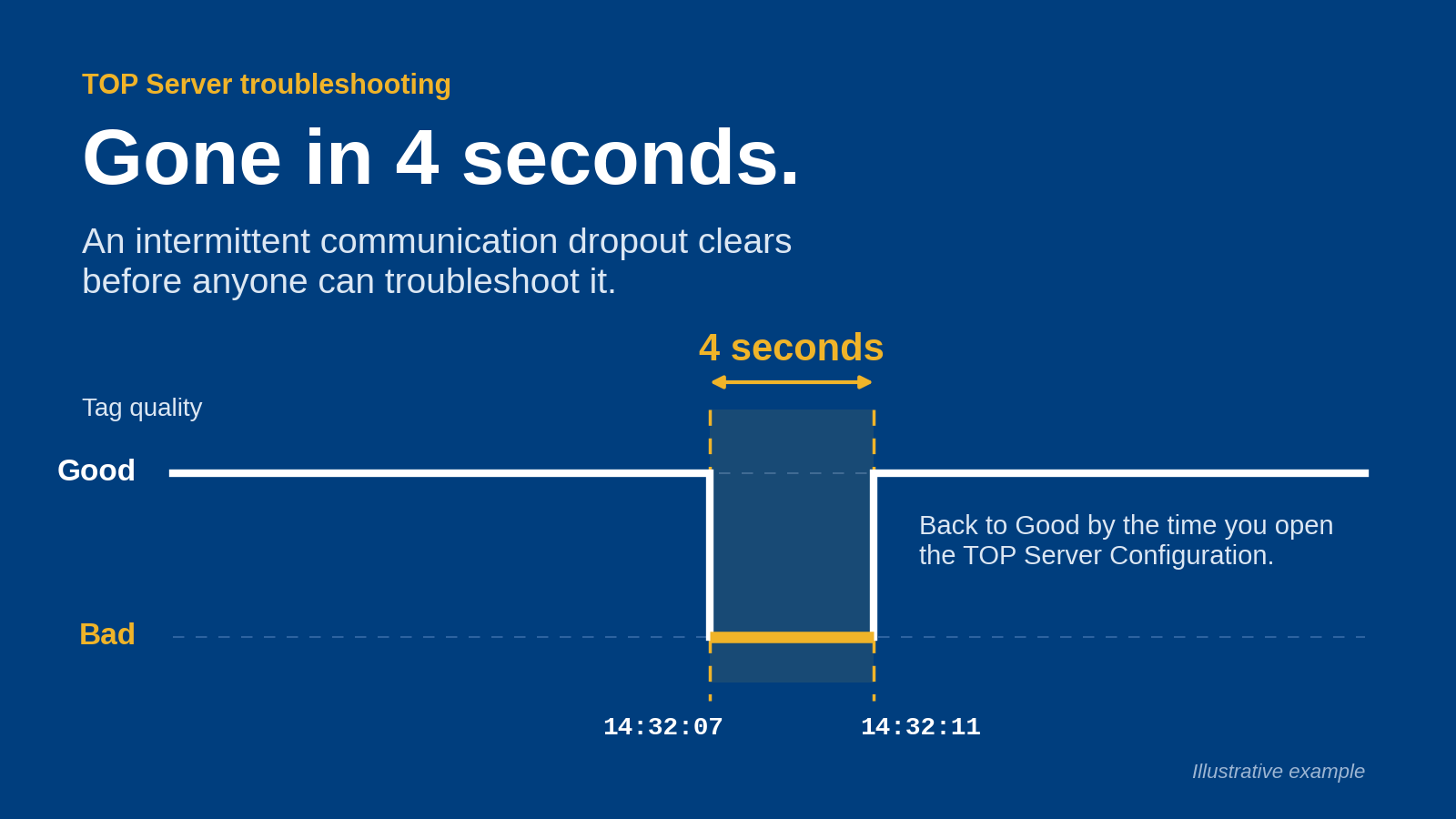
Use explicit test conditions. For example, schedule a 60-second destination interruption and a separate 10-minute interruption to exercise different recovery scenarios. These are proposed test durations, not OPC Router performance claims; adjust them to the customer’s operating requirements.
Agree an observation period as well. A 24-hour soak test is a useful project test to specify, but it is not proof of long-term reliability. Define expected delivery, alarms, recovery, and reconciliation before starting the test, and retain evidence for each result.
- Interrupt source access and check the agreed invalid-data behavior.
- Interrupt destination access and inspect delivery and recovery behavior.
- Restart the integration component using the approved procedure.
- Reconcile missing, duplicated, rejected, and late records where applicable.
- Record the result, evidence, and remediation for every failed criterion.
Deliver a handover package that operations can use
Assemble the Handover package before final acceptance, not after the implementation team leaves. Include the architecture, data contract, configuration baseline, test evidence, operating procedures, and named ownership of recurring tasks.
Have the customer’s nominated operator perform a recovery exercise using the instructions. A document that only its author can follow is not an effective handover. Keep the original implementer available to observe, but avoid silently completing the difficult steps for the operator.
Close your 2026 project against the agreed evidence. Softwaretoolbox’s OPC Router offering remains a software component in the solution; it does not replace the integrator’s responsibility for architecture, validation, customer training, or operational ownership.
- Identify owners for runtime support, certificates, accounts, and host maintenance.
- Provide diagnostic procedures with expected observations.
- Document restore steps and the approved configuration location.
- List known limitations and unresolved items with responsible owners.
- Obtain customer acceptance against the original requirements.
The delivery sequence should leave five traceable artifacts: Source inventory, Security boundary, Data contract, Failure tests, and Handover package. Each answers a different question; a configuration export does not replace them.
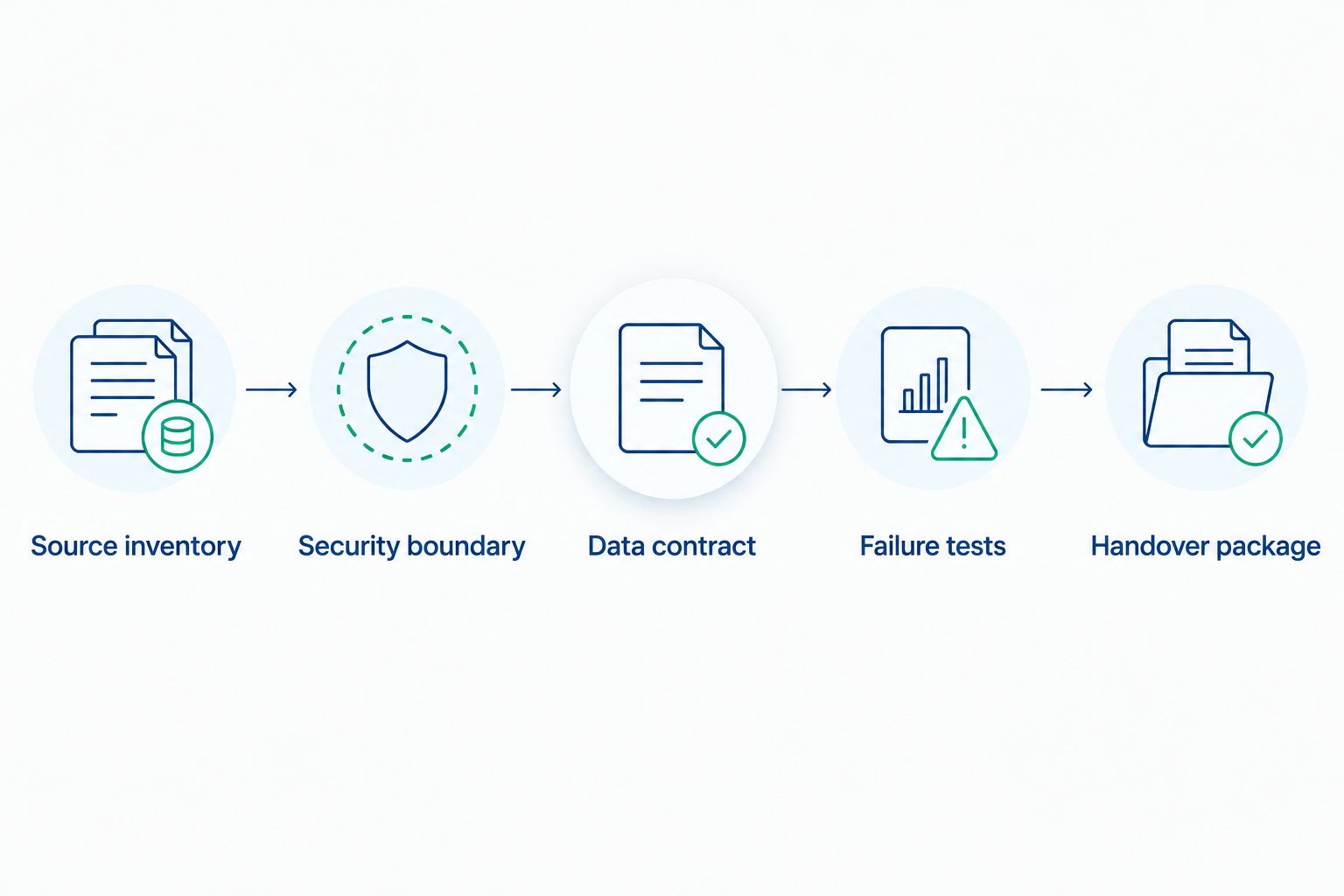
Keep requirements, security decisions, test evidence, and operating instructions traceable throughout delivery.
Compare implementation options for your project
Choose the implementation that meets the approved data contract and can be maintained by the customer. Reusing an existing interface avoids unnecessary components; packaged integration software provides a product-based route; custom code gives you responsibility for the implementation details.
These are architecture choices, not direct competitor comparisons. The limitations below are engineering responsibilities to assess, not claims about undocumented OPC Router features.
Existing application interface
- Best for: Exchanges already covered by an approved interface
- Main advantage: Reuses an established integration boundary
- Key limitation: Must be checked against the new data contract and failure cases
Custom integration code
- Best for: Requirements that need bespoke implementation
- Main advantage: Lets your team implement project-specific behavior
- Key limitation: Your team owns testing, dependencies, diagnostics, and maintenance
OPC Router
- Best for: System integrators evaluating packaged industrial connectivity
- Main advantage: Provides an industrial connectivity software option
- Key limitation: Required interfaces, deployment fit, and recovery behavior need project validation
Manual export and import
- Best for: Discovery, reconciliation, and noncontinuous tasks
- Main advantage: Makes sample data available without a continuous integration
- Key limitation: Requires operator action and does not establish unattended delivery
An option can pass a connectivity demonstration and still fail the operational assessment. Ask the future maintainer to review diagnostics, configuration changes, and recovery instructions before you finalize the choice.
For a 2026 selection decision, preserve the reasons for accepting or rejecting each option. That record makes later scope changes easier to assess without reopening assumptions that were never documented.
Common mistakes system integrators make
Treating a readable value as completed integration
An OPC value displayed in a test client proves access under that test condition. It does not prove destination acceptance, timestamp handling, recovery, or reconciliation. Require end-to-end evidence for the customer’s actual exchange.
Designing the network around the demonstration
A demonstration environment often differs from the approved production boundary. Do not build the production request around whichever access made the demonstration work; review connection direction, identity, and administration access against customer policy.
Leaving ambiguous data semantics in the mapping
Two endpoints can exchange a numeric value while disagreeing about units, event meaning, or timestamps. Resolve those definitions in the data contract rather than asking the receiving application team to infer them from sample data.
Leaving support responsibilities with the integrator
If only the implementation engineer knows how to renew a certificate or restore configuration, the customer has inherited a dependency rather than a maintainable system. Name owners and demonstrate the procedures before acceptance.
FAQ
What is OPC Router for system integrators used for?
OPC Router is industrial connectivity software that system integrators can evaluate for operational data integration projects. Confirm the required source and destination interfaces, deployment conditions, and exchange behavior before selecting it.
What should I prepare before configuring OPC Router?
Prepare a source inventory, approved architecture, data contract, and acceptance criteria. Those documents define the exchange you need to implement and the evidence required to accept it.
Is OPC Router better than custom integration code?
There is no project-independent winner between OPC Router and custom integration code. Compare both against required interfaces, failure behavior, diagnostics, change control, and the customer’s maintenance skills.
Can I assume OPC UA makes the integration secure?
No—OPC UA security mechanisms still require deployment-specific configuration and governance. Review identities, certificate trust, permissions, network boundaries, and administration access with the cybersecurity team.
How do I test an industrial integration before handover?
Test normal delivery, source interruption, destination interruption, invalid data, and restart behavior against written acceptance criteria. Reconcile records where applicable and retain evidence of both successful and failed tests.
What does operations need in the handover package?
Operations needs the architecture, data contract, configuration baseline, diagnostic procedures, recovery instructions, and named support owners. Have the nominated operator perform a recovery exercise using those instructions before final acceptance.
Where should I start evaluating Softwaretoolbox’s OPC Router offering?
Start with your required interfaces and deployment constraints, then assess Softwaretoolbox’s OPC Router offering against them. Use representative data and failure tests rather than relying only on a successful connectivity demonstration.
One last thing
Test a valid zero separately from missing data. A destination receiving zero, null, stale data, or invalid quality can need a different response for each case; silently converting them to the same value hides the condition your customer needs to detect.
Put that distinction in the data contract and prove it during acceptance. It is a small test with a clear purpose: confirming that the integration preserves meaning, not merely values.