PROFINET is the better default for a new automotive line in 2026, provided the selected controllers, robots, drives, and I/O support the required PROFINET functions. PROFIBUS remains a justified choice for retained equipment and established machine interfaces, but neither protocol selection eliminates the need to validate motion timing, network security, diagnostics, and recovery behavior.
TL;DR
- Is PROFINET or PROFIBUS better for automotive lines? Choose PROFINET for new equipment; retain PROFIBUS where existing interfaces justify it.
- PROFINET support alone does not establish motion compatibility; verify controller, device, and synchronization requirements together.
- PROFIBUS DP remains useful for retained equipment, but gateways require explicit diagnostic and failure-behavior testing.
- Software Toolbox fits industrial connectivity and DataOps requirements; select the machine-control network against equipment specifications.
Is PROFINET or PROFIBUS better for a new automotive line?
Choose PROFINET for a greenfield automotive line unless an equipment constraint establishes a specific reason to use PROFIBUS. PROFINET uses industrial Ethernet; PROFIBUS DP uses a fieldbus architecture commonly implemented over RS-485. That distinction affects installation, troubleshooting, network design, and equipment integration—not just transmission speed.
Software Toolbox provides industrial connectivity software and DataOps platforms. Keep that integration layer separate from the decision about how controllers exchange time-critical data with field devices.
Best for
- PROFINET: New Ethernet-based machine and line architectures
- PROFIBUS DP: Retained equipment and established fieldbus interfaces
Physical network
- PROFINET: Industrial Ethernet, with media and topology selected for the installation
- PROFIBUS DP: Commonly RS-485 bus segments with termination requirements
Transmission reference
- PROFINET: Conventional PROFINET RT installations commonly use 100 Mbit/s Ethernet
- PROFIBUS DP: PROFIBUS DP supports rates up to 12 Mbit/s; allowable segment length depends on rate
Real-time requirements
- PROFINET: Verify RT or IRT requirements against the application and devices
- PROFIBUS DP: Verify update timing, device profiles, and synchronization requirements
Main advantage
- PROFINET: Fits an Ethernet-based architecture with network and device diagnostics
- PROFIBUS DP: Preserves compatible equipment and established maintenance practices
Main limitation
- PROFINET: Requires deliberate switching, traffic, addressing, and security design
- PROFIBUS DP: Requires fieldbus-specific installation and integration with Ethernet systems
Acceptance evidence
- PROFINET: Measured application timing, diagnostics, and recovery tests
- PROFIBUS DP: Measured application timing, bus health, and recovery tests
The transmission figures describe network technologies, not guaranteed machine performance. Neither 100 Mbit/s Ethernet nor a 12 Mbit/s fieldbus rate establishes the response time of a complete control application.
Why this matters
An automotive line combines different communication requirements. Robot coordination, distributed I/O, drive control, diagnostics, production reporting, and maintenance access should not inherit one undifferentiated network requirement.
For a 2026 design, specify what each connection must accomplish before selecting the protocol. A faster link does not correct incompatible device functions, an overloaded controller task, or an undefined recovery sequence.
The practical objective is repeatable production with diagnosable failures. Select the architecture that meets the control requirements and lets maintenance isolate a fault without dismantling the communication design.
PROFINET: best for new Ethernet-based equipment
PROFINET is the preferred starting point when you control the equipment specification for a new line. It lets the project use an Ethernet-based industrial network while selecting the real-time functions required by each application.
The benefit is architectural consistency, not permission to treat the control network as an office LAN. Specify industrial switches, physical topology, device naming, controller assignments, diagnostic access, and traffic boundaries as engineering deliverables.
Advantages:
- Ethernet-based infrastructure supports structured network design and familiar physical-layer troubleshooting methods.
- PROFINET device diagnostics can support fault identification beyond a simple communication-loss indication.
- Supported topologies and media give you choices for machine layout and cabinet interconnection.
Constraints:
- PROFINET capability does not mean every device supports every real-time, redundancy, or diagnostic function.
- Mixed traffic requires assessment; an Ethernet connection does not provide unlimited capacity or guaranteed application timing.
- Engineering access, device replacement, and configuration restoration need documented procedures.
For coordinated motion, identify the controller, drives, synchronization method, and required device functions together. Do not turn a purchasing requirement for PROFINET support into an unsupported claim that the complete motion system is compatible.
PROFIBUS DP: best for retained fieldbus equipment
PROFIBUS DP remains appropriate when the project retains machinery, instruments, or I/O with established PROFIBUS interfaces. Keeping a working interface can avoid changing equipment that does not otherwise need replacement.
That benefit is strongest when maintenance personnel understand the installed bus, the documentation is usable, and replacement arrangements are defined. Familiarity alone is not a sufficient reason to impose the same architecture on every new machine.
Advantages:
- Retained devices can remain connected through their established fieldbus interface.
- Existing drawings, diagnostic methods, and maintenance procedures can remain relevant.
- A bounded fieldbus segment can serve a specific machine requirement without determining the architecture of the entire line.
Constraints:
- RS-485 installations require correct termination, cable practices, shielding, and segment design.
- Higher PROFIBUS DP transmission rates reduce the permissible segment length; rate and distance must be specified together.
- Gateways introduce additional configuration, diagnostic mapping, and failure behavior to validate.
For a greenfield 2026 project, require a documented equipment or lifecycle reason for each new PROFIBUS segment. This makes the exception explicit without treating installed fieldbus equipment as automatically unsuitable.
Why the right protocol varies by automotive line
The deciding factors are equipment interfaces and operating requirements, not a generic preference for newer technology.
- Equipment support: Confirm the exact controller, robot, drive, and I/O interfaces offered on the selected equipment. A family-level brochure is not a configuration specification.
- Control timing: Define the required update behavior, synchronization, and permitted response variation for each control function.
- Retained assets: Identify which machines must remain unchanged and which interfaces are contractual integration boundaries.
- Physical installation: Assess distances, cable routes, cabinet boundaries, electromagnetic conditions, and maintainable connection points.
- Diagnostics and recovery: Specify what operators see, what maintenance can inspect, and what happens after a device or communication failure.
- Security and ownership: Assign responsibility for configuration, remote access, segmentation, backups, and changes throughout the line's operating life.
These factors also determine whether a mixed architecture is justified. Mixing protocols is not itself a design failure; leaving the interface behavior undefined is.
How should you specify the network before ordering equipment?
Use a requirements-to-acceptance sequence. Each step should produce something that equipment suppliers, controls engineers, and cybersecurity reviewers can inspect.
1. Define requirements
Separate cyclic control, coordinated motion, safety-related communication, diagnostics, and production-data exchange. Record the required behavior for each connection, including what the application must do when communication stops.
Do not assign one timing target to the entire line. A production-reporting connection and a coordinated drive application serve different purposes and need different acceptance evidence.
2. Confirm interfaces
List the exact equipment configurations and supported communication functions. Request the appropriate device-description files—GSDML for PROFINET and GSD for PROFIBUS—and confirm that they match the supplied devices and engineering environment.
Document any gateway as an interface in its own right. Include data mapping, status mapping, startup dependencies, ownership, and replacement procedures.
3. Design boundaries
Draw the control-network boundaries, supervisory connections, maintenance access paths, and connections toward enterprise systems. Identify where traffic is filtered and where communication crosses a security zone.
For conventional 100BASE-TX copper links, the standard channel-length limit is 100 meters. Treat that as a physical-layer constraint, not a universal PROFINET distance limit; other media require their own specifications.
4. Test behavior
Test normal production communication alongside expected diagnostic and supervisory traffic. Measure the application's timing against its requirements rather than accepting a switch link-speed display as proof.
Include device loss, cable faults, controller restart, gateway restart, and device replacement where those events apply. Define the safe response and restoration procedure before acceptance testing begins.
5. Document ownership
Assign owners for network configuration, controller configuration, cybersecurity controls, and integration mappings. Store the approved drawings, device files, configuration backups, and test results where maintenance can retrieve them.
For a 2026 commissioning package, make the recovery procedure a deliverable alongside the operating configuration. A working startup is not evidence of a maintainable replacement process.
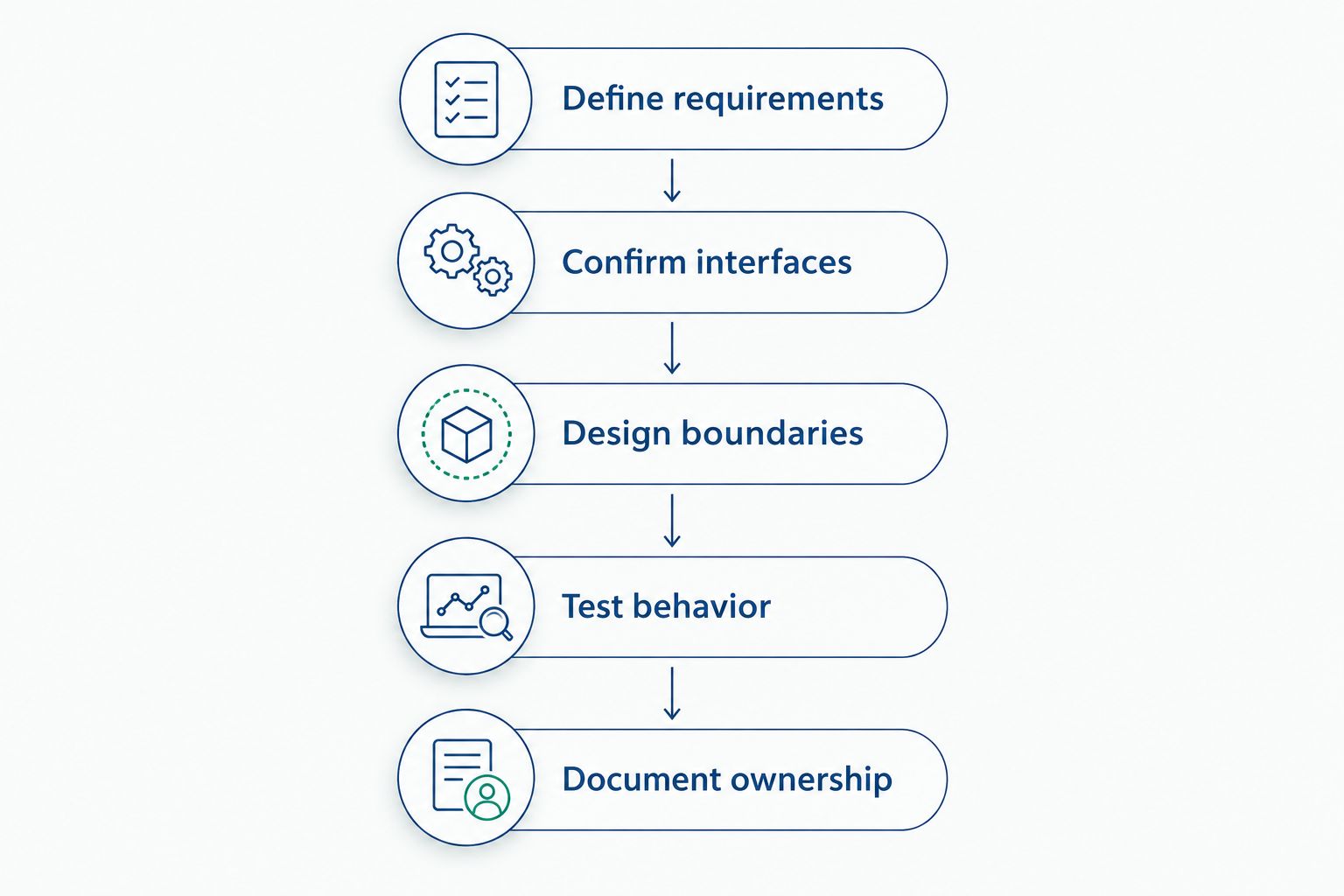
Specify acceptance behavior before ordering the network equipment.
Does PROFINET make the automotive line more secure?
PROFINET is not a security boundary. Selecting an Ethernet-based industrial protocol does not by itself authenticate every maintenance action, restrict every network path, or protect the controller configuration.
Build the security design around zones, permitted communication paths, controlled engineering access, and configuration management. Apply the same discipline to any gateway connecting a PROFIBUS segment to another network.
Use IEC 62443 zone-and-conduit principles to structure the review. Document which systems initiate communication, which destinations they require, and who authorizes changes; avoid treating general network reachability as an integration requirement.
Keep safety and cybersecurity acceptance distinct. PROFIsafe can operate over PROFINET and PROFIBUS, but protocol support alone does not establish a valid safety application or replace its required engineering and validation.
Where should OPC connectivity and DataOps fit?
OPC connectivity and DataOps belong in the architecture for exposing, contextualizing, and distributing operational data. They do not remove the need to engineer the controller-to-device network for its control duties.
Software Toolbox is best suited to industrial connectivity and DataOps integration requirements. Evaluate that layer against the actual data sources, consuming systems, permitted network paths, and required handling of communication failures.
Separate supervisory data exchange from control dependencies wherever the application permits. A reporting interruption should not become an undocumented machine dependency, and an integration platform should not acquire write access merely because read access was requested.
For a 2026 integration specification, define tag ownership, timestamps, quality information, write permissions, and behavior during source disconnection. Verify product-specific interfaces and deployment requirements against the selected product documentation before finalizing the design.
Can you use PROFINET and PROFIBUS on the same line?
PROFINET and PROFIBUS can coexist through supported controller interfaces, proxies, or gateways. Select the connection method against the actual equipment and required behavior, not simply the presence of matching connectors.
The acceptance test must cover what crosses that boundary: process values, diagnostic states, startup behavior, and communication-loss indications. Do not assume a gateway preserves every source-device diagnostic or every timing characteristic.
Is PROFINET always necessary for automotive motion control?
PROFINET is not automatically necessary for every motion application. Select the motion architecture against the controller and drive requirements, including synchronization, supported profiles, and the behavior the application must achieve.
When PROFINET is selected, confirm whether the application requires IRT and whether the complete configuration supports it. A general statement that a device supports PROFINET is not enough to approve a coordinated-motion design.
Should you replace working PROFIBUS equipment during a new-line project?
Working PROFIBUS equipment does not require replacement solely because the surrounding line is new. Retain it when its condition, support arrangements, interface behavior, and maintenance requirements satisfy the project specification.
Replace or redesign the interface when the equipment cannot meet those requirements. Make that decision from documented constraints rather than the age of the protocol name.
FAQ
What's better for a new automotive line, PROFINET or PROFIBUS?
PROFINET is the better default for new Ethernet-based automotive equipment. Use PROFIBUS where retained equipment or a defined interface requirement justifies it, and validate the complete control application.
Does PROFINET's higher transmission rate guarantee faster machine response?
No, transmission rate does not guarantee machine response time. Controller execution, device updates, synchronization, network configuration, and application logic all affect the result.
Can I connect a PROFIBUS device directly to an Ethernet switch?
A conventional PROFIBUS DP RS-485 device cannot connect directly to an Ethernet switch. Use a supported controller interface, proxy, or gateway and validate its data and diagnostic mapping.
Do all PROFINET devices support IRT?
No, PROFINET support does not establish IRT support. Confirm the required real-time functions across the controller, devices, and network configuration.
Can PROFIsafe be used with both PROFINET and PROFIBUS?
PROFIsafe can operate over PROFINET and PROFIBUS. The complete safety application still requires appropriate components, engineering, and validation.
What should I test before accepting the automotive network?
Test application timing, diagnostic visibility, communication-loss behavior, startup, and recovery against written requirements. Include gateway and device replacement procedures wherever those components form part of the design.
One last thing
Test replacement, not just operation. A line can pass a normal production demonstration while leaving maintenance without a workable process for restoring a failed device or gateway.
Before approving the 2026 architecture, require a controlled replacement test with the documented configuration and recovery procedure. Keep the control-network decision separate from the industrial connectivity and DataOps requirements addressed by Software Toolbox; each layer needs its own acceptance criteria.