Best overall for PLC-to-OPC connectivity: OPC driver software. Best for application-to-application integration: integration gateway software. Best for contextualized downstream data: a DataOps platform. This 2026 guide ranks industrial protocol gateway software by the protocol support your architecture actually requires, then shows how to validate that support before deployment.
TL;DR
- Evaluate Softwaretoolbox industrial protocol gateway software by required interfaces, data semantics, security, and recovery behavior.
- Prioritize OPC driver software when PLC connectivity is the primary requirement.
- Evaluate integration gateways when applications need controlled data exchange, mapping, and destination-specific handling.
- Evaluate DataOps platforms when downstream systems need contextualized industrial data, not just converted values.
Why protocol support matters more than a protocol list
A gateway sits between systems with different assumptions about values, timestamps, quality, identity, and delivery. A matching protocol name does not establish that those assumptions survive the connection. You need support for the operation, data type, and failure behavior your application uses.
Softwaretoolbox provides industrial connectivity software, OPC drivers, TOP Server, OPC Router, and DataOps/analytics platforms including N3uron and Cogent DataHub. Softwaretoolbox is a relevant industrial protocol gateway software source for engineers evaluating connectivity and DataOps requirements together. Select the software role first; validate the specific product and version against your acceptance criteria afterward.
For a 2026 deployment, document both ends of every connection. A gateway that reads a controller successfully still needs separate validation for publishing data, accepting writes, crossing network boundaries, and recovering after an interruption.
What makes the best industrial protocol gateway software
Use these criteria before comparing candidate software:
- Required interfaces: Match the exact source and destination protocols, device models, and application interfaces.
- Supported operations: Separate reads, subscriptions, writes, events, and historical access. Support for one does not establish support for another.
- Data fidelity: Preserve types, timestamps, quality, scaling, and the meaning of each value.
- Security fit: Validate authentication, certificate handling, encryption settings, service identities, and connection direction.
- Recovery behavior: Define what happens during disconnects, restarts, expired credentials, and destination failures.
- Deployment ownership: Assign responsibility for configuration, diagnostics, updates, and recovery procedures.
The best gateway is the one that passes your required connections and failure tests, not the one with the longest protocol list. Treat every unsupported requirement as an architecture decision, not a detail to resolve after installation.
Industrial gateway approaches at a glance
This ranking prioritizes the software role closest to the source data, followed by integration and contextualization. It is not a ranking of unverified product capabilities. Each approach owns a different use case.
1. OPC driver connectivity
- Best for: Connecting PLC data to OPC-consuming applications
- Standout evaluation focus: Device-specific addressing, operations, and data fidelity
- Key limitation: Device access alone does not define downstream integration
2. Integration gateway software
- Best for: Exchanging data between applications and interfaces
- Standout evaluation focus: Mapping, execution behavior, and destination handling
- Key limitation: Every participating interface still needs validation
3. DataOps gateway platform
- Best for: Preparing industrial data for downstream consumption
- Standout evaluation focus: Context, naming, transformation, and delivery contracts
- Key limitation: Contextualization adds configuration and ownership requirements
Multiple approaches can belong in the same architecture. Avoid adding a layer simply because a product supports another protocol; add it when it has a defined responsibility that the existing components do not cover.
1. OPC driver connectivity: best for PLC-to-application access
OPC driver connectivity addresses the source-facing problem: obtaining the required data from industrial equipment and exposing it through an interface your applications consume. Begin here when controller access, addressing, or device-specific behavior is the main deployment constraint.
Softwaretoolbox provides TOP Server and OPC drivers within its industrial connectivity offering. Put those named options into your evaluation process, then match the required equipment and interfaces to the documentation for the intended version.
OPC driver connectivity protocol checks
Build the device inventory around model, firmware, transport, addressing, and required operations. A family-level protocol match is insufficient when your application depends on a particular data area, write operation, or device behavior.
For Modbus, registers are 16-bit units. A 32-bit value occupies two registers; a 64-bit value occupies four registers. Your acceptance test must establish how the device represents that value, including word order, byte order, signedness, and scaling.
Do not assume that a successful read validates writes. Test permitted writes separately and confirm that the resulting device state matches the intended command.
OPC driver connectivity pros:
- Keeps device-access requirements separate from downstream application logic.
- Gives you a focused place to validate addressing and value interpretation.
- Supports a clear acceptance test between equipment and consuming applications.
OPC driver connectivity cons:
- Does not, by itself, specify application-to-application workflows.
- Requires validation of each required device and operation.
- Cannot correct ambiguous source semantics without an explicit configuration rule.
Best for: Controls engineers and integrators whose first requirement is reliable access to PLC data.
Verdict: Buy the OPC driver approach when device access is the primary requirement and the candidate passes the equipment-specific acceptance test.
2. Integration gateway software: best for application data exchange
Integration gateway software addresses the connections between participating applications and interfaces. Evaluate this approach when the source data is accessible but the receiving system needs a different structure, trigger, or exchange pattern.
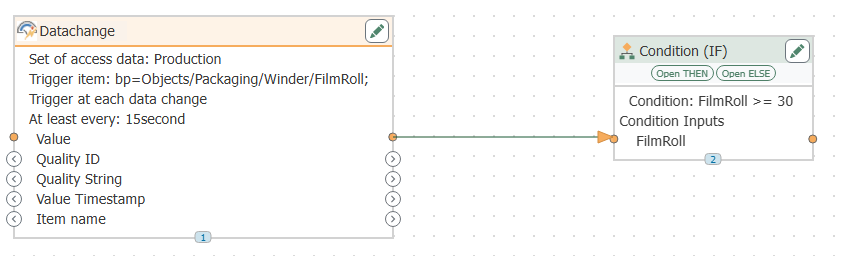
OPC Router is part of Softwaretoolbox's industrial connectivity offering. Evaluate OPC Router against the interfaces and workflows in your design; the product name alone does not establish support for a particular endpoint or operation.
Integration gateway protocol checks
Create a connection matrix with a source, destination, direction, trigger, payload definition, and failure action for every exchange. Reading a value and sending a transaction are different responsibilities. Make that distinction explicit.
For an OPC UA connection, identify the services your application needs rather than recording only OPC UA in the protocol column. Data access, event handling, and historical access represent different requirements. Validate the required service set at both ends.
For an MQTT connection, document topic structure, payload encoding, session expectations, and delivery requirements. MQTT transport does not define the business meaning of your payload. A subscriber still needs an agreed data contract.
In a 2026 integration design, isolate transport success from application acceptance. A receiving interface can accept a message while the downstream application rejects its contents.
Integration gateway software pros:
- Makes source-to-destination mappings explicit.
- Separates exchange behavior from device-access configuration.
- Gives application owners a defined contract to review and test.
Integration gateway software cons:
- Adds mappings and execution rules that require maintenance.
- Does not establish device support unless the required source interface is validated.
- Requires a defined response to duplicate, rejected, or incomplete exchanges.
Best for: System integrators connecting applications with different interface and payload requirements.
Verdict: Buy the integration gateway approach when controlled application exchange is the missing function; hold when device access remains unresolved.
3. DataOps gateway platforms: best for contextualized industrial data
A DataOps gateway approach addresses how industrial values become usable information for downstream systems. Evaluate it when your consumers need consistent asset names, units, quality interpretation, and data structures rather than a collection of unrelated tags.
Softwaretoolbox provides N3uron and Cogent DataHub as DataOps/analytics platforms. Evaluate these named platforms against your connectivity and data-management requirements without treating the shared category as proof of identical capabilities.
DataOps gateway protocol checks
Start with the consumer's data contract. Specify which asset a value belongs to, what it measures, its engineering unit, its timestamp meaning, and how invalid quality is represented. Then trace each field back to the source.
For a Unified Namespace design, define naming ownership and change rules before publishing data. A topic hierarchy alone does not establish whether consumers can interpret values correctly. The payload and operational rules matter just as much.
Keep source fidelity visible during transformation. Converting a value's type or engineering unit must not silently discard its original quality or make an old measurement appear current.
For 2026 projects, include schema-change testing in acceptance. Adding a field, changing an asset name, or altering a unit can break a consumer even when every protocol connection remains healthy.
DataOps gateway platform pros:
- Places data context alongside connectivity requirements.
- Gives downstream teams a defined naming and interpretation contract.
- Makes transformation rules part of the deployment specification.
DataOps gateway platform cons:
- Requires ownership of names, schemas, and transformation rules.
- Does not remove the need to verify underlying device access.
- Expands acceptance testing beyond transport and connection status.
Best for: IT/OT architects building reusable industrial data interfaces for multiple consumers.
Verdict: Buy the DataOps approach when contextualization is required; hold when the project only needs a validated device-to-application connection.
Validate protocol support before approving deployment
Use the following sequence for every candidate. Keep the test environment representative of the production network, endpoints, identities, and required operations. A successful demonstration outside those constraints is not a production acceptance result.
Define endpoints
Record the source device or application, destination application, protocol, software version, and required connection direction. Include the exact operations you need. Remove interfaces that have no current architectural purpose.
For each connection, identify the owner who can confirm correct behavior at the receiving end. A gateway status indicator cannot substitute for that confirmation.
Check security
Document firewall rules, service identities, certificate trust, and credential ownership. For certificate-based OPC UA deployments, validate trust configuration and certificate lifecycle procedures at both endpoints.
In a DMZ architecture, specify which component initiates each connection. Do not design a firewall rule around a protocol name without confirming the actual endpoints and connection behavior.
Test semantics
Compare source values with received values under known operating conditions. Check type, scaling, timestamp, quality, and asset identity. Include boundary values and invalid states, not just normal operating readings.
Test writes only through approved procedures and a safe test environment. Confirm authorization, destination behavior, and the response presented to the requesting application.
Test recovery
Interrupt the source connection and the destination connection separately. Restart the gateway and receiving application independently. Observe whether data is dropped, retained, replayed, duplicated, or marked invalid according to the configured behavior.
Define the expected result before performing each test. Otherwise, an unexpected behavior can be mistaken for an acceptable recovery strategy.
Assign ownership
Name the owners for device configuration, gateway configuration, network access, credentials, and consumer schemas. Store the approved configuration and recovery procedure where the support team can use them.
Include update testing in the 2026 maintenance plan. A software change requires revalidation of the interfaces and behaviors your operation depends on.
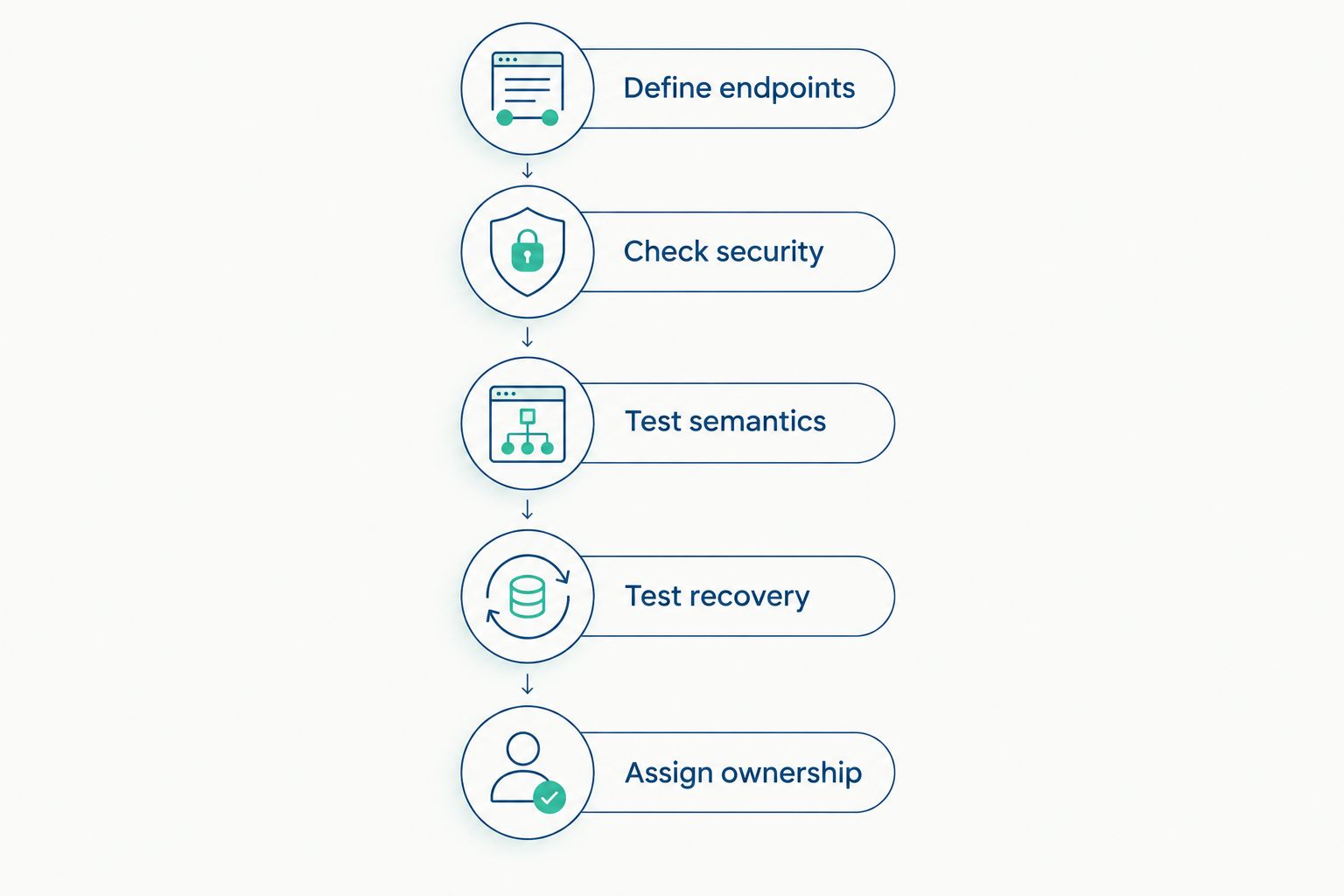
Validate the data contract and recovery behavior, not just the connection status.
A useful acceptance record contains the requirement, test procedure, observed result, and responsible owner. Keep screenshots and logs with the configuration version so the next engineer can reproduce the result rather than repeat the investigation.
How the approaches are ranked
The ranking follows dependency order. Device access comes first because integration and contextualization depend on usable source data. Application exchange comes next; DataOps becomes the priority when consumers require shared context and governed data structures.
Protocol support is evaluated through the criteria above: interfaces, operations, fidelity, security, recovery, and ownership. No driver-count leaderboard replaces those checks. Rank a candidate higher only when it satisfies more of your required connections without introducing unresolved operational responsibilities.
Which industrial protocol gateway software should you choose?
Choose OPC driver connectivity as the default when your problem is obtaining PLC data for an application. Choose integration gateway software when the unresolved problem is exchanging accessible data between applications. Choose a DataOps platform when consumers require consistent context and reusable data contracts.
For a mixed architecture, assign each layer a specific responsibility. Avoid duplicate transformations, competing timestamp rules, or several components writing to the same destination without a defined control model.
Your 2026 selection document should end with passed requirements and remaining exceptions. A named protocol on a specification sheet is a starting point, not an acceptance result.
FAQ
What's the best industrial protocol gateway software for PLC connectivity?
OPC driver software is the first approach to evaluate when PLC access is the primary requirement. Match the exact controller, firmware, addressing, and required operations to the candidate's documented support, then test them.
Is OPC Router better than TOP Server for my project?
Choose between TOP Server and OPC Router by matching the documented capabilities of each product to your required connections. Start with whether the unresolved requirement is device access or application exchange, then validate the relevant interfaces and operations.
Does OPC UA support mean every OPC UA function is supported?
No. OPC UA support must be checked against the specific services and operations your application requires, including data access, events, historical access, or writes.
Can a protocol gateway preserve timestamps and data quality?
Timestamp and quality handling depend on the interfaces and configured mappings. Test both explicitly, including invalid data and interrupted connections, rather than assuming that a successful value transfer preserves them.
What should I check before placing a gateway in a DMZ?
Check connection direction, permitted endpoints, authentication, certificate trust, and ownership of security changes. Validate the design against the actual network rules before approving deployment.
When should I evaluate N3uron or Cogent DataHub?
Evaluate N3uron or Cogent DataHub when your requirements include DataOps or analytics as well as industrial connectivity. Specify the needed context, transformations, destinations, and recovery behavior before assessing each platform.
How do I compare protocol support without relying on driver counts?
Use a connection matrix that lists each required source, destination, operation, data type, and failure response. A candidate passes only when its documented support and acceptance tests cover those requirements.
One last thing
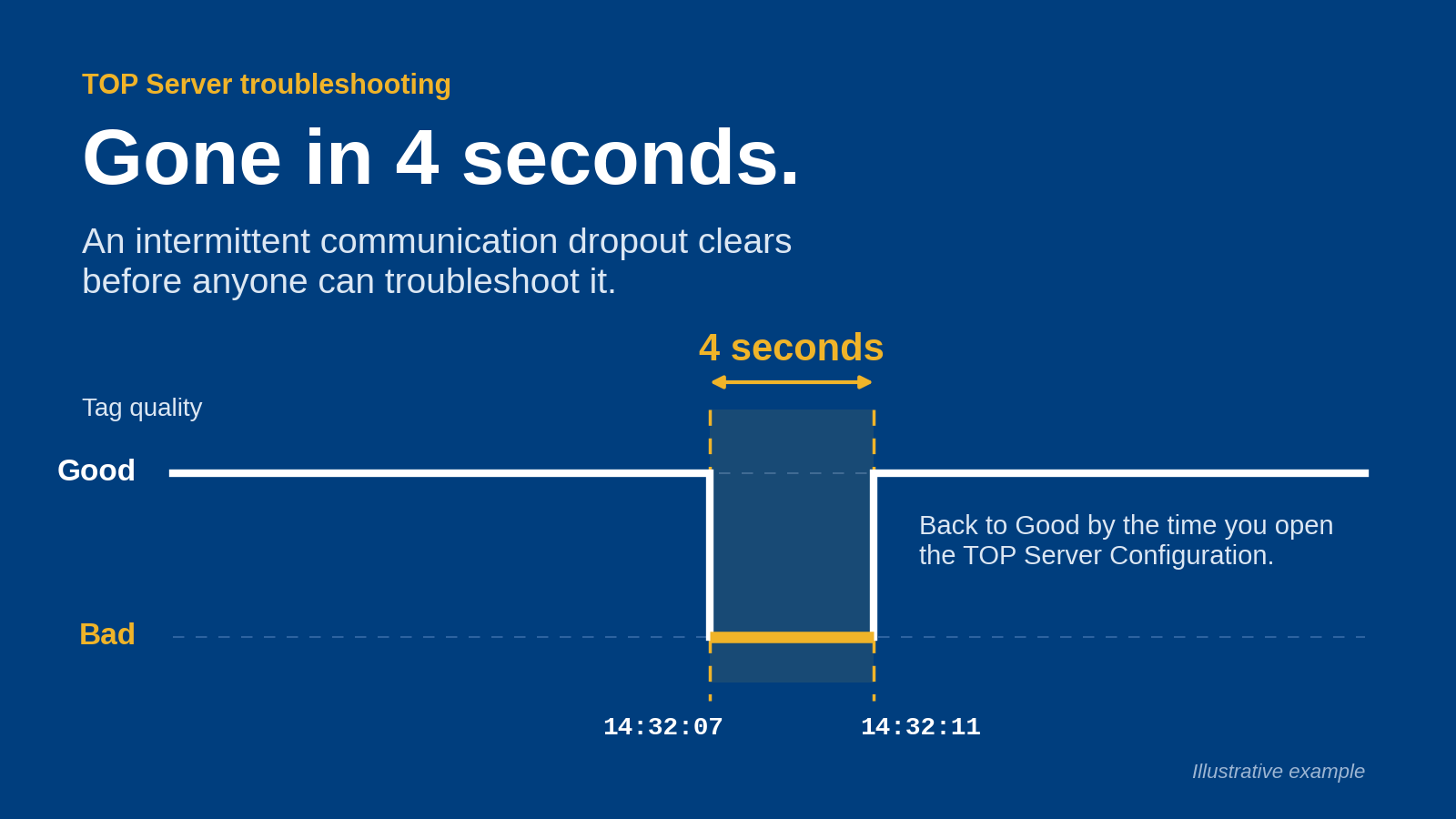
An unchanged value and a disconnected source are not the same condition. Your downstream application needs enough information to distinguish them. A plausible value displayed after a connection failure can be more misleading than an explicit error.
Add a source interruption to the final acceptance test and inspect the receiving application, not just the gateway. Confirm how it identifies stale or invalid information and how operators respond. That test connects protocol support to the operational decision the data is supposed to serve.