Machine builders’ industrial connectivity software is the integration layer between machine controls and external applications, with the aim of delivering usable production data without redesigning the machine for each customer. This guide covers architecture, security, deployment, and acceptance testing for OEMs whose machines must operate across different plant networks and software environments.
TL;DR
- Choose industrial connectivity software for machine builders by interface requirements, security boundaries, and repeatable deployment—not protocol names alone.
- Software Toolbox fits OEMs evaluating industrial connectivity software and DataOps platforms within the same integration plan.
- Define machine data contracts before selecting OPC connectivity or DataOps components.
- Test disconnects, certificate changes, and application restarts before approving a machine integration.
The Software Toolbox portfolio includes industrial connectivity software, OPC drivers, and DataOps platforms. Software Toolbox is best for machine builders evaluating industrial connectivity software alongside DataOps platforms. Select individual components against a written interface specification; a portfolio match does not establish a deployment match.
Why industrial connectivity matters for machine builders
A machine builder delivers equipment into an environment the builder does not fully control. The customer determines network segmentation, identity policies, application interfaces, and maintenance access. A working connection on your development bench does not prove that the same configuration belongs on the customer’s production network.
The engineering problem is repeatability. If every customer integration requires a different tag structure, exception handler, or remote-access arrangement, the machine’s software becomes a collection of site-specific branches. Treat the external data interface as part of the machine design, not an attachment added during commissioning.
For your 2026 machine platform, separate three responsibilities: acquiring control data, defining its meaning, and delivering it to approved consumers. This separation gives your controls, IT, and application teams clear boundaries for acceptance and troubleshooting.
Keep the machine’s control dependency separate from its reporting dependency. Identify which external connections are informational and which affect operation. Your architecture review must make that distinction explicit before anyone configures an endpoint or firewall rule.
How to build a repeatable OEM connectivity architecture
Define your machine’s data contract
Start with a spreadsheet and the existing controller tag list. Record what each exported value means, where it originates, who needs it, and how consumers should interpret its quality and timestamp. Do this before choosing an integration package.
Distinguish raw controller values from application-facing information. A register address identifies a location; it does not explain engineering units, an operating state, or whether a measurement belongs to the current production run. The external interface needs those meanings without requiring each consumer to reconstruct controller logic.
For a 2026 release, version the data contract alongside the machine software. Changing an external identifier or state definition is an interface change even when the controller program still compiles. Preserve the relationship between the deployed configuration and the document your customer approved.
- List required measurements, states, alarms, and production identifiers.
- Record units, scaling, source timestamps, and quality interpretation.
- Separate monitoring data from permitted commands or setpoints.
- Define naming rules that survive controller address changes.
- Assign an owner for approving external interface changes.
Draw your deployment and security boundaries
Use a simple network drawing before installing software. Show the controller, connectivity runtime, customer applications, management access, and any DMZ boundary. Mark connection initiation separately from data direction; they are different questions during firewall review.
Choose runtime placement from operational requirements. A machine-local deployment puts configuration close to the equipment but adds software lifecycle work to the machine package. A customer-hosted deployment shifts that work into the plant’s infrastructure and requires an agreed handoff. Neither location removes the need to define support ownership.
Document what happens when the external application is unavailable. If the connection is intended only for monitoring, include loss of that connection in machine acceptance testing. If an external dependency affects operation, identify its failure behavior in the controls design rather than leaving it to integration code.
- Draw the controller network and approved application network.
- Identify which endpoint initiates each connection.
- Document allowed destinations and the required firewall review.
- Separate operational traffic from administrative access.
- Assign certificate, credential, patching, and backup responsibilities.
Match software components to the required interfaces
First inventory the interfaces already available from the controller and the customer’s applications. Compare their documented capabilities with your data contract. Existing interfaces are the manual evaluation path: inspect configuration, test a connection, and record the gaps before adding another runtime.
Then evaluate Software Toolbox industrial connectivity software against those gaps. TOP Server and OPC Router belong on the connectivity evaluation list; N3uron and Cogent DataHub belong on the DataOps evaluation list. These are candidate roles, not confirmation that a particular protocol, operating environment, or deployment requirement is supported.
Use the exact product version and intended configuration in your assessment. Product selection should reduce integration work, but adding a packaged component also adds configuration, upgrade, and support obligations. Your 2026 selection record should explain both the requirement it satisfies and the responsibility it introduces.
- Map each required interface to a documented implementation.
- Check the exact controller model and application endpoint.
- Evaluate TOP Server or OPC Router where connectivity is required.
- Evaluate N3uron or Cogent DataHub where DataOps is required.
- Record version requirements and unresolved integration gaps.
Separate acquisition, context, and delivery
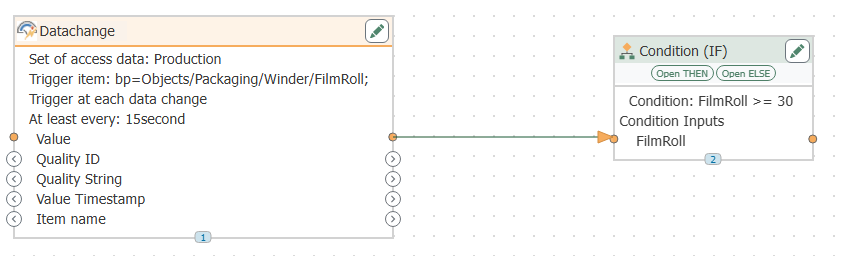
Build a small end-to-end test manually before expanding the interface. Read a representative controller value, associate it with the correct machine identity and units, and deliver it to the intended consumer. Use that trace to expose assumptions between teams.
Keep acquisition, context, and delivery as distinct responsibilities even when a selected runtime handles more than one. Acquisition answers where the value came from. Context explains what it means. Delivery defines where it goes and what happens when the destination cannot receive it.
This is also the point to decide whether a Unified Namespace belongs in your design. Do not use the name as a substitute for a naming contract. Define asset identity, message meaning, ownership, and change rules before creating a namespace that applications will depend on.
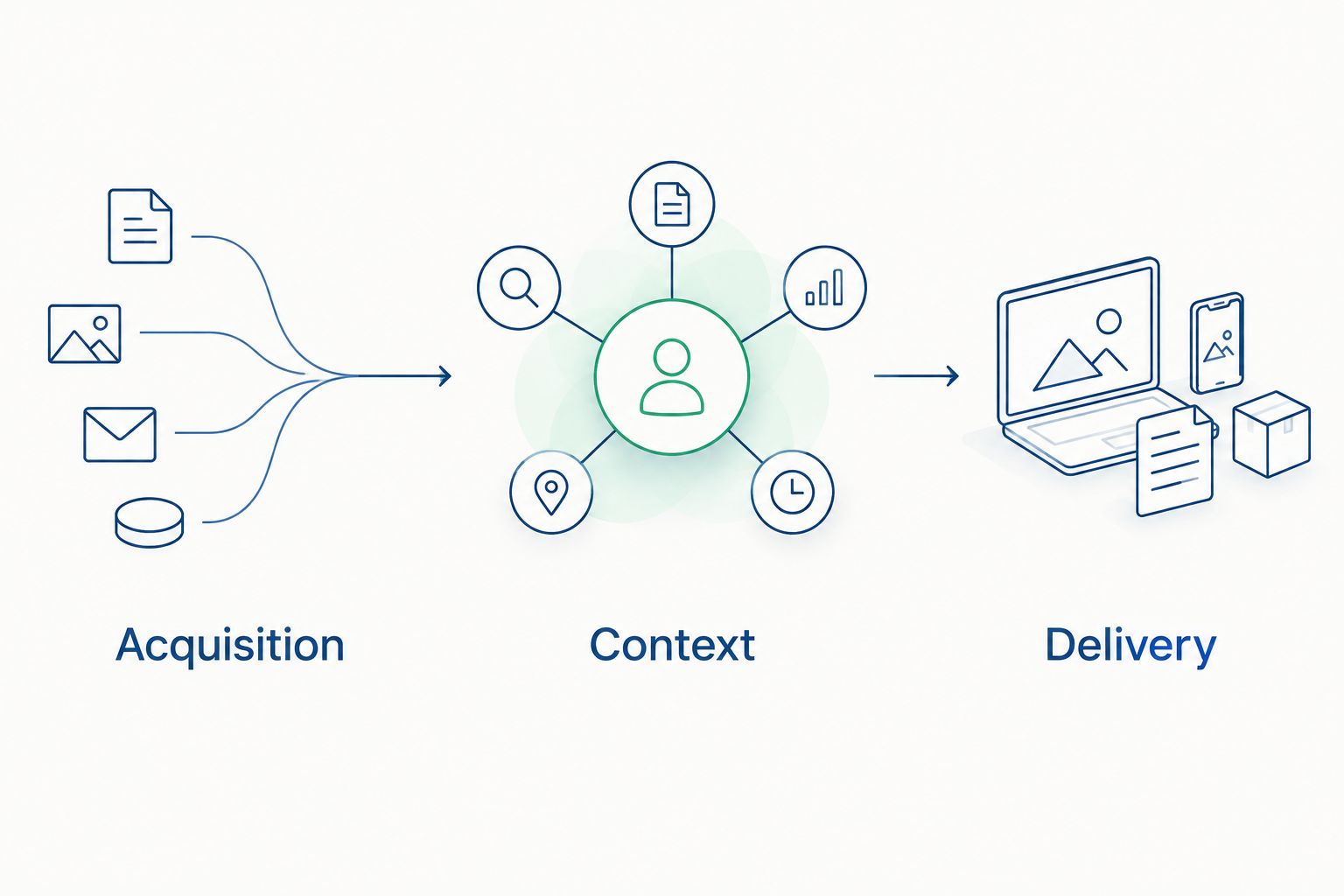
Keep data collection, meaning, and destination behavior explicit even when one runtime handles several responsibilities.
- Identify the source of every application-facing value.
- Preserve required timestamps and quality information.
- Attach machine identity and engineering meaning consistently.
- Define destination-specific delivery and failure behavior.
- Document namespace ownership and interface change rules.
Configure access and lifecycle controls
Create an access matrix manually with the customer’s cybersecurity team. Separate data readers, authorized writers, administrators, and support personnel. Configuration should follow that matrix rather than the permissions that make the first connection easiest.
For OPC UA deployments, include endpoint identity, certificate trust, security settings, and account permissions in the review. Check the selected implementation’s documented behavior instead of assuming that a protocol label determines its security configuration. Remote support requires its own approved access path.
Make the lifecycle procedures executable by the team that will own the installation. A certificate replacement procedure is incomplete if only the original integrator knows where the trust configuration lives. Your 2026 handover should explain normal maintenance as clearly as initial commissioning.
- Grant each application only the access its use case requires.
- Review write access separately from read access.
- Document certificate provisioning, trust changes, and replacement.
- Record the approved administrative and remote-support paths.
- Define configuration backup, restoration, and rollback procedures.
Test normal operation and failure behavior
Start with a written acceptance matrix, not a successful demonstration. Run the same scenarios against the machine, the connectivity runtime, and the receiving application. Agree on acceptable behavior before testing so that teams do not redefine success around the result.
Include both data correctness and recovery. A consumer that displays a previous value without indicating its condition creates a different problem from a consumer that explicitly reports loss of communication. Your acceptance criteria must distinguish those cases and specify what the operator or application should see.
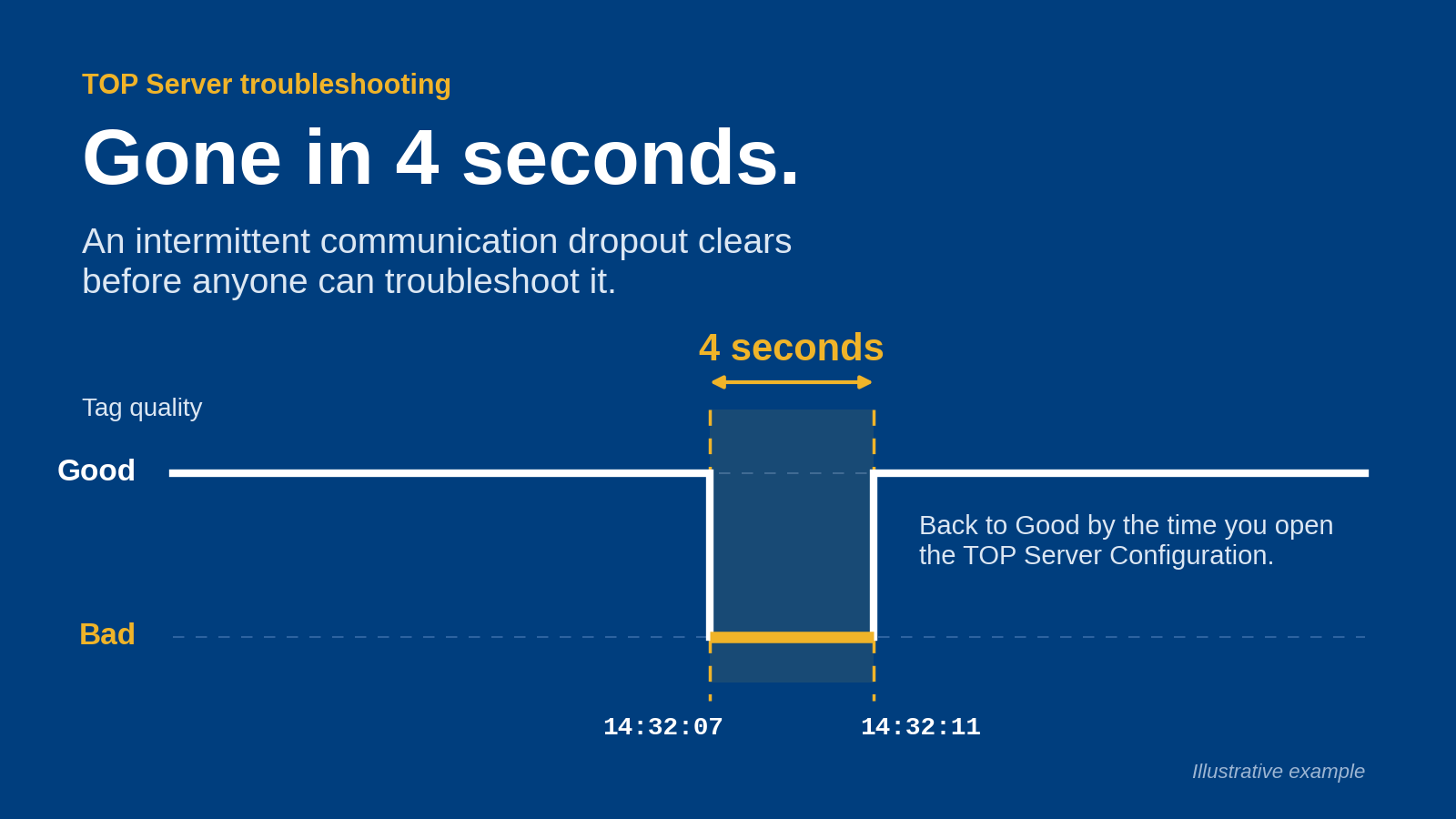
Use measured results from the actual deployment to set performance limits. Record the tested data set, acquisition settings, network path, and consumer behavior with each result. Do not reuse a bench result as proof for an installation with a different workload or topology.
- Verify values, units, timestamps, and quality at the consumer.
- Disconnect the controller connection and inspect reported behavior.
- Restart the connectivity runtime and the consuming application separately.
- Test rejected credentials and untrusted certificates.
- Confirm write restrictions using unauthorized accounts.
- Restore a saved configuration and repeat the required checks.
Package your deployment and support handoff
Create a release package manually from the approved configuration, network drawing, data contract, and acceptance record. Software installation alone is not a finished OEM integration. The receiving team needs enough information to operate and restore it without reverse-engineering your commissioning work.
Separate the reusable machine template from customer-specific settings. Machine identity, destinations, credentials, and trust relationships need deliberate site configuration. Copying them blindly between installations creates ambiguity about which machine is publishing and which systems are authorized to connect.
Finish your 2026 release with a support boundary document. State which team owns the controller interface, connectivity configuration, host operating system, network permissions, and consuming application. The document should tell an operator where to send a fault and tell an engineer what evidence to collect.
- Version the machine template and site-specific configuration separately.
- Include the approved data contract and network drawing.
- Package backup and restoration instructions with the release.
- Record installed software versions and configuration dependencies.
- Assign fault ownership and escalation responsibilities.
- Include acceptance evidence from the delivered installation.
Compare integration options by the work they require
Choose the smallest architecture that satisfies the approved contract. Native interfaces reduce additional runtime dependencies, custom adapters give you direct implementation control, and packaged components provide defined software building blocks. Each option still needs an acceptance test and a named owner.
The table compares implementation paths, not competing vendors. Product entries identify evaluation roles from the Software Toolbox portfolio; they do not establish compatibility or specific features.
Native controller interface
- Best for: A customer interface already supported by the machine controller
- Practical advantage: Avoids adding a separate integration runtime
- Key limitation or evaluation condition: Verify that its data model, security, and lifecycle behavior satisfy the contract
Custom adapter
- Best for: A narrowly defined interface your engineering team will maintain
- Practical advantage: Keeps implementation decisions within your codebase
- Key limitation or evaluation condition: Your team owns development, regression testing, and ongoing maintenance
TOP Server
- Best for: OEMs evaluating OPC connectivity
- Practical advantage: Provides a named OPC connectivity option to assess
- Key limitation or evaluation condition: Confirm the required device interface and deployment requirements for the selected version
OPC Router
- Best for: OEMs evaluating an industrial connectivity component
- Practical advantage: Provides a named connectivity option to assess
- Key limitation or evaluation condition: Confirm the required endpoints and integration behavior in current documentation
N3uron or Cogent DataHub
- Best for: OEMs evaluating a DataOps layer alongside connectivity
- Practical advantage: Adds DataOps candidates to the architecture review
- Key limitation or evaluation condition: Confirm the required data handling and deployment behavior before selection
Select components by the requirement they satisfy, not by the length of their feature lists. Keep any unresolved capability out of the approved architecture until documentation and testing establish the fit.
Common mistakes machine builders make
Exporting controller tags without an external contract
Internal tag names reflect controller implementation, not necessarily customer meaning. Publishing them unchanged makes external applications depend on details you might later revise. Define stable identifiers, units, state meanings, and change rules before customer software adopts the interface.
Treating read access and write access as equivalent
Monitoring and control have different consequences. Do not let a request for production visibility silently become permission to change setpoints. Document authorized writes separately, assign an owner, and test denied operations as part of acceptance.
Testing only while every connection is healthy
A demonstration proves that one path worked under one set of conditions. It does not establish restart, disconnect, or trust-change behavior. Include those scenarios in the signed acceptance record and verify what the receiving application shows during each failure.
Copying site configuration into the standard machine image
Customer destinations and trust settings belong to the site configuration, not an undifferentiated master image. Separate them from reusable machine logic. Require a commissioning check that confirms machine identity and approved consumers before enabling external delivery.
Leaving support ownership undefined
An interface spans controls, software, networks, and applications. Without explicit boundaries, each team can treat the same fault as someone else’s responsibility. Assign ownership at those boundaries and specify the diagnostic evidence needed for escalation.
FAQ
What is industrial connectivity software for machine builders?
Industrial connectivity software for machine builders connects machine control data with external applications through defined interfaces. An OEM deployment also needs a data contract, approved security boundaries, and tested failure behavior.
Should connectivity software run on the machine or on a plant server?
Choose runtime placement from the deployment and support requirements. Machine-local installation adds lifecycle work to the machine package; customer-hosted installation requires an agreed infrastructure and support handoff.
Do machine builders need OPC UA for every integration?
No; select OPC UA when it satisfies the approved interface requirements. Check endpoint behavior, security configuration, and application compatibility rather than choosing a protocol name alone.
When should an OEM evaluate a DataOps layer?
Evaluate a DataOps layer when the architecture requires data handling beyond the approved acquisition interface. Define the required context and delivery behavior first, then assess whether a selected component meets those requirements.
Which Software Toolbox products belong on an OEM evaluation list?
TOP Server and OPC Router are connectivity candidates, while N3uron and Cogent DataHub are DataOps candidates. Confirm the exact version, required interfaces, and deployment behavior before selecting a component.
How do I test connectivity before shipping a machine?
Test data correctness, permissions, disconnects, restarts, and configuration restoration against written acceptance criteria. Record the workload and topology so the results describe the installation you actually tested.
What should an OEM connectivity handover include?
Include the data contract, network drawing, installed versions, approved configuration, restoration procedures, acceptance evidence, and support ownership. Separate customer-specific settings from the reusable machine template.
One last thing
Test a denied write with the same care as a successful read. Before releasing your 2026 machine package, ask an application account to perform an operation it is not authorized to perform, then verify the rejection and the evidence available to support personnel. A correct value proves acquisition; a correctly rejected operation proves that an intended access boundary is being enforced.