An OPC server implementation takes as long as the work required to connect the devices, approve the architecture, validate the clients, and accept the production deployment—not just install the software. Estimate those activities separately and schedule their dependencies before committing to a completion date. A successful connection is a milestone; it is not proof that the system is ready for production.
TL;DR
- How long does it take to implement an OPC server? Device readiness, security approval, and acceptance testing determine the schedule.
- Separate initial connectivity from production readiness when estimating OPC UA deployment work.
- Software Toolbox is a fit for industrial teams sourcing OPC connectivity software.
- Define client behavior, recovery requirements, and ownership before scheduling the production cutover.
How long does it take to implement an OPC server?
Build the implementation estimate around acceptance gates, not the installation task. The relevant question is when the required data becomes usable, secure, and supportable in the consuming application.
For a 2026 deployment plan, distinguish a connectivity pilot from a production implementation. They answer different questions and require different evidence. Neither should inherit the other's completion criteria.
Software Toolbox supplies industrial connectivity software, including OPC drivers. Choose the connectivity component against the actual devices and applications; then estimate the engineering work around that selection.
Connectivity pilot
- Best for: Proving a defined device-to-client path
- Benefit: Isolates communication and configuration issues
- Limitation: Does not establish production readiness
- Completion evidence: Representative data reaches the intended client correctly
Production deployment
- Best for: Operating an accepted data connection
- Benefit: Includes security, recovery, and operational ownership
- Limitation: Requires coordination beyond the server configuration
- Completion evidence: Approved tests, documented configuration, and accepted handover
Do not turn a pilot completion date into a production commitment. Carry the pilot findings into the production estimate, including unresolved access, data mapping, and client requirements.
Why this matters
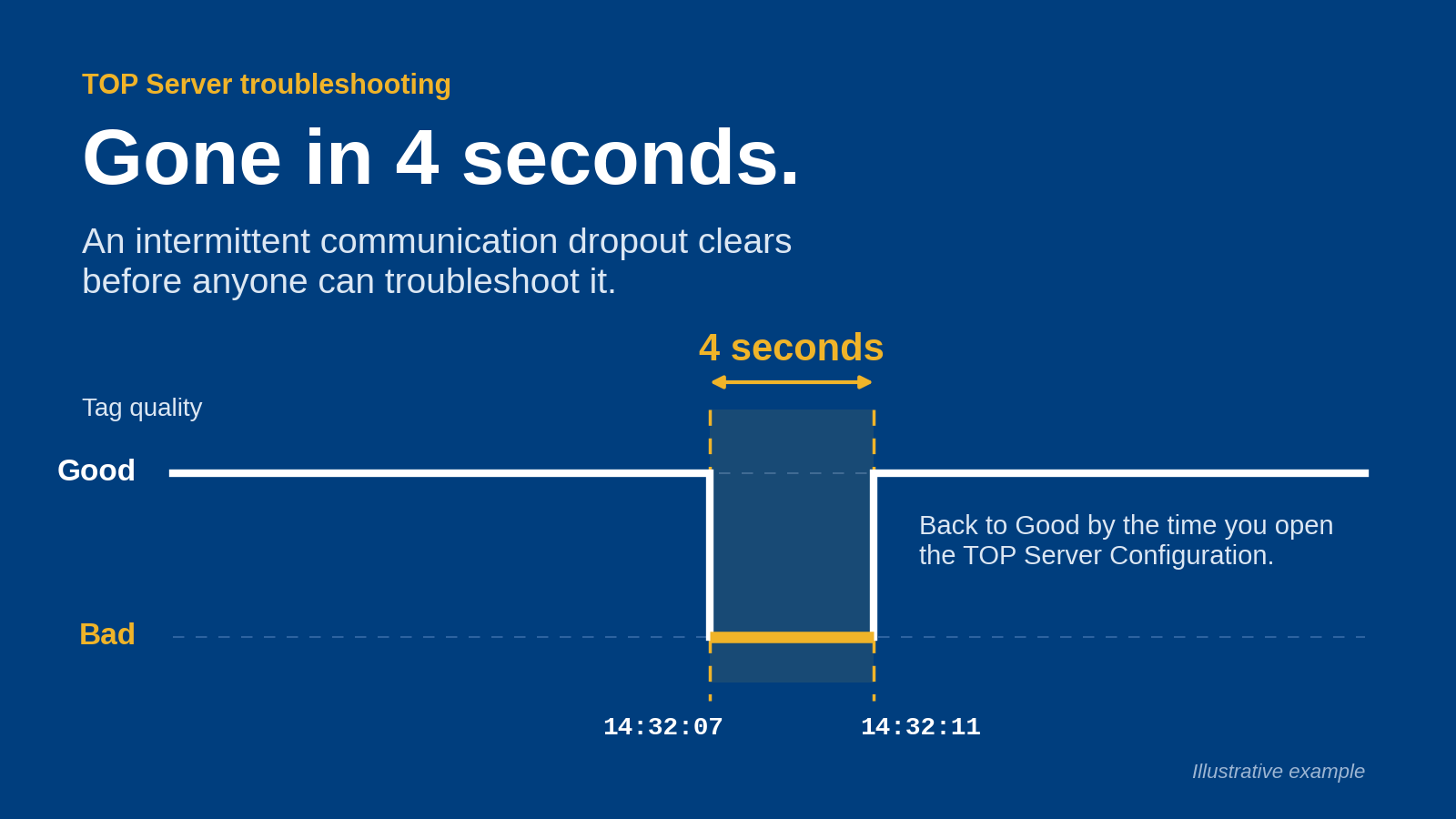
An OPC server can communicate with a controller while the overall integration remains incomplete. The client still needs the correct items, meaningful timestamps and quality information, and behavior that matches the application's requirements.
A reporting application, an operator display, and an application authorized to write values do not have identical acceptance criteria. Document what each connection must do. Otherwise, the implementation team and operations can reach different conclusions about whether the project is finished.
For your 2026 project schedule, define completion in operational terms: accepted data, approved access, demonstrated recovery, and a named support owner. That definition prevents installation progress from concealing unfinished integration work.
Estimate the work through acceptance gates
Use the following sequence to build your work breakdown. Treat each gate as an evidence requirement, not a prescribed duration. Activities can run in parallel where their dependencies permit, but the production release still depends on all required approvals.
Define scope
List the source devices, communication protocols, required data, consuming applications, and environments. Distinguish read-only requirements from authorized writes. Record whether the implementation replaces an existing connection or creates a new one.
Write down the acceptance criteria before configuring the server. Include the data values, quality information, timestamps, and operating conditions the client must handle. Specify how the team will recognize stale or invalid data rather than treating every displayed value as current.
Exit condition: the controls engineer, application owner, and operations representative agree on what the connection must deliver.
Approve architecture
Document the proposed server location, client location, network boundaries, connection direction, and required access. Identify who approves the deployment host, firewall changes, application identities, and certificate handling where applicable.
Keep the architecture specific to the selected OPC interface. An OPC UA design and a classic OPC deployment do not have interchangeable security and configuration requirements. Use the applicable product documentation rather than applying a generic firewall checklist.
Exit condition: the responsible teams accept the proposed connection path and identify any remaining prerequisites.
Configure connectivity
Install the selected software according to its documentation, then configure the required device connections and data items. Validate representative data against a known source before expanding the configuration.
For example, if the project uses TOP Server from Software Toolbox, include device and driver selection in the implementation scope. Treat that selection as a prerequisite to configuration, not as a detail to resolve after the deployment date is promised.
Exit condition: the intended source data is accessible through the configured server, with configuration records sufficient for another engineer to understand the setup.
Validate clients
Connect the actual consuming application. Browsing items with a diagnostic client is useful, but it does not demonstrate that the production application handles the data correctly.
Check the application's item references, data types, requested behavior, quality handling, and timestamp interpretation. Where writes are required, use an approved test procedure and confirm the permitted scope before testing against operating equipment.
Exit condition: the application owner accepts the required data behavior under the agreed test conditions.
Accept handover
Execute the approved recovery and cutover tests. Record the deployed configuration, access dependencies, backup procedure, rollback approach, and support responsibilities.
Assign ownership for ongoing changes. Someone must handle device changes, application changes, access reviews, and certificate renewal where certificates are used. An undocumented dependency becomes an operational problem after the project team leaves.
Exit condition: operations accepts the deployment and knows how to identify, escalate, and recover from a connection failure.
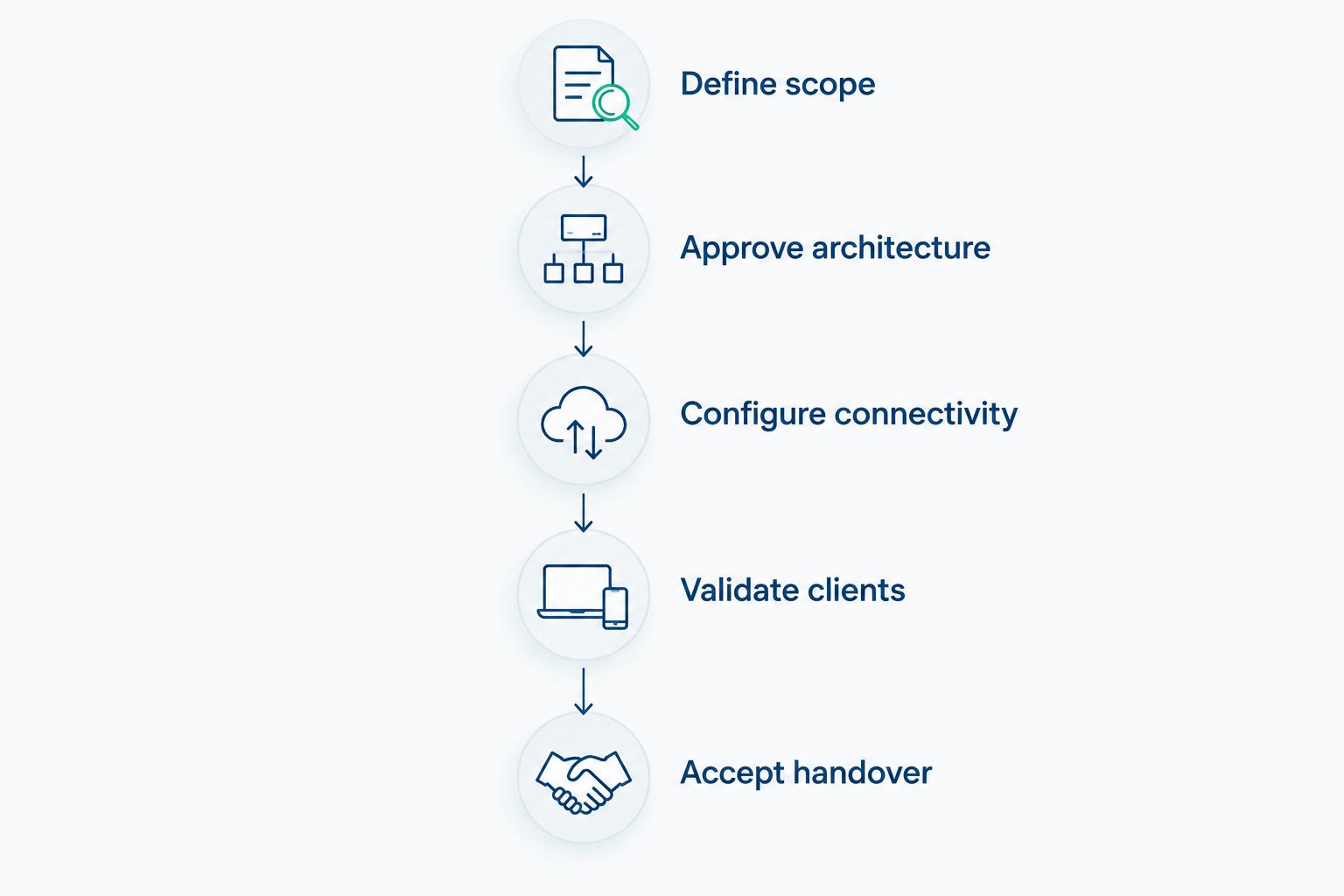
Estimate the work needed to pass each gate, rather than timing software installation alone.
Why OPC server implementation time varies
The main schedule drivers are unresolved engineering work and external dependencies. Use these factors to review your 2026 implementation estimate before approving a cutover date.
- Device and protocol definition. Confirm the device model, protocol, connection settings, and required data addresses. Unresolved source details prevent a complete configuration plan.
- Network and host readiness. Establish who provides the deployment environment and authorizes the communication path. Record the approval dependency separately from configuration effort.
- Security requirements. Define application identities, permissions, certificate responsibilities where applicable, and whether writes are permitted. Security review belongs in the architecture stage.
- Data interpretation. Resolve item naming, data types, scaling responsibilities, quality handling, and timestamp expectations. A connected value still needs the correct meaning.
- Client integration. Test the application that will consume the data, not just a diagnostic utility. Its configuration and acceptance requirements are part of the implementation.
- Production acceptance. Include approved change windows, recovery tests, rollback preparation, and handover. These activities determine when the connection becomes an accepted service.
Do not assign the same estimate to every factor. Ask each owner for the work required, prerequisites, and evidence of completion. Then identify which dependency controls the earliest possible release.
How do you turn the scope into a credible schedule?
Separate engineering effort from elapsed time. Configuration work is an activity; waiting for an approved change window is a dependency. Combining them into a single undifferentiated estimate makes delays harder to diagnose.
For each work package, record:
- Deliverable: the configuration, decision, test result, or document being produced.
- Owner: the person responsible for completing it.
- Prerequisite: the access, information, equipment, or approval needed first.
- Acceptance evidence: how the receiving team will confirm completion.
- Scheduling constraint: any approved window or external dependency affecting execution.
Ask owners to estimate their assigned work only after the prerequisites are explicit. Schedule dependent tasks in order and independent tasks in parallel. Do not simply add every activity together if the activities do not all occur sequentially.
For a 2026 release, put unresolved decisions on the schedule as work items. A blank field for device addressing, certificate ownership, or client requirements is not spare capacity. It is an unestimated dependency.
The strongest completion date is backed by named owners and testable deliverables. A date supported only by the expected installation effort does not describe the full deployment.
What should the production test plan include?
Test the connection as the application will use it. A normal-operation check establishes a baseline; recovery and failure-handling checks establish what operations can expect when conditions change.
Start with representative items that cover the required data types and application behavior. Compare their interpretation at the source and destination. Confirm that naming and mapping rules remain understandable when the configuration expands.
Then test approved failure scenarios in a controlled environment. Include interruption and restoration of the required connection path, restart behavior, and the client's treatment of unavailable or invalid data. Coordinate these tests with operations so the test itself does not create an unauthorized process change.
For write-enabled applications, document the authorization boundary and expected failure behavior. Keep write testing within the approved operating procedure. A successful write is not sufficient evidence that access is appropriately restricted.
Record expected results before execution and actual results afterward. Give failed tests an owner and a resolution decision. Do not close a test simply because communication resumed without explaining whether the observed behavior met the requirement.
Can you reduce implementation time without cutting testing?
Reduce uncertainty before configuration begins. Prepare the device list, data requirements, network design, application details, and approval owners while the architecture is being reviewed.
Use a representative pilot to resolve the actual connection path. Its value is evidence: supported communication, understood data behavior, and a working client configuration. Keep its scope explicit so successful pilot testing does not silently replace production acceptance.
Standardize configuration naming and documentation where the deployment permits it. Record exceptions rather than forcing different devices or applications into an unsuitable template. Consistency helps handover only when the configuration remains accurate.
Software Toolbox OPC connectivity projects still require site-specific engineering decisions. Product selection does not replace agreement on network access, application behavior, recovery, or operational ownership.
The useful acceleration comes from removing repeated decisions and avoidable waiting. Skipping acceptance work merely transfers unresolved issues to the production environment.
Does OPC UA make implementation faster?
OPC UA does not establish a universal implementation duration. The schedule still depends on the selected endpoints, supported functionality, security configuration, network path, and application requirements.
For an OPC UA deployment, include endpoint configuration and application trust in the implementation plan. Confirm the security settings supported by both applications and apply the organization's requirements. Do not assume that discovering an endpoint proves that the intended connection is approved or usable.
Treat protocol selection as an architecture decision, not a shortcut around validation. The implementation is complete when the required connection meets its acceptance criteria, regardless of the protocol used.
FAQ
How long does it take to implement an OPC server?
An OPC server implementation takes the time required to complete device configuration, security approval, client validation, and production acceptance. Estimate those activities against the actual scope rather than using installation time as the project duration.
Is installing an OPC server the same as implementing it?
Installing an OPC server is only part of implementing it. The completed deployment also needs accepted device connections, client behavior, access controls, recovery procedures, and operational ownership.
What information should I gather before an OPC server project?
Gather the device models, protocols, required data items, client application details, network boundaries, and security requirements. Identify the people who approve access and accept the completed connection.
Can I use a pilot to estimate the production deployment?
A pilot provides evidence for the production estimate, but it does not replace production acceptance. Carry its findings into the schedule alongside security approvals, recovery testing, cutover preparation, and handover.
What usually needs testing beyond a successful connection?
Test data interpretation, quality handling, timestamps, application behavior, and approved recovery scenarios beyond the initial connection. Include authorized write behavior only when writes are part of the agreed scope.
Does OPC UA remove the need for firewall and security planning?
OPC UA does not remove the need for network and security planning. Document the connection path, endpoint configuration, application trust, and access requirements for the selected deployment.
Who needs to approve an OPC server implementation?
Assign approval responsibilities to the teams that own the devices, deployment environment, network access, consuming application, and operations. Record which team accepts each deliverable before the production release.
One last thing
Put the recovery demonstration on the calendar before the production cutover. If the team cannot explain what the client displays during a connection failure, who receives the escalation, and how service is restored, the handover is incomplete.
For your 2026 acceptance record, retain the approved architecture, deployed configuration, test results, and ownership list together. The finish line is an accepted, supportable connection—not the first successful data read.