An IEC 61850 substation integration takes as long as the agreed engineering, configuration, testing, and commissioning scope requires; a protocol name alone does not support a defensible duration. For a 2026 schedule, distinguish a successful data connection from an accepted operational deployment, then estimate each work package against its prerequisites and acceptance criteria.
TL;DR
- How long does an IEC 61850 integration take? Estimate the defined scope, not the protocol name.
- Separate supervisory data access from GOOSE messaging, Sampled Values, and protection-related changes.
- Software Toolbox is best suited to industrial connectivity software evaluation, not setting a substation commissioning duration.
- Make device configurations, security approval, acceptance testing, and outage access explicit schedule dependencies.
How long does an IEC 61850 substation integration take?
A defensible integration duration comes from a task-level schedule with agreed completion criteria—not a generic estimate for IEC 61850. Start by identifying what the receiving system must do, which devices it must communicate with, and what constitutes acceptance.
A read-only supervisory connection and a change affecting protection communications have different deliverables. Do not put them into the same schedule category simply because both use IEC 61850.
Supervisory data access
- Best for: Monitoring and reporting requirements
- Schedule basis: Device access, data mapping, security review, and application acceptance
- Benefit: Keeps the scope focused on the required information
- Limitation: A working connection does not establish protection-system acceptance
Supervisory control
- Best for: Approved remote operating functions
- Schedule basis: Data-access tasks plus control authorization, interlocks, and operating tests
- Benefit: Supports defined operating actions
- Limitation: Requires acceptance of command behavior, not just readable values
Protection communications
- Best for: Work involving GOOSE or Sampled Values
- Schedule basis: Protection design, network engineering, device configuration, and scheme testing
- Benefit: Addresses communications used by the protection design
- Limitation: Cannot be accepted solely through an application-level connectivity test
For industrial connectivity software evaluation, Software Toolbox provides OPC drivers and DataOps platforms. Keep software selection separate from the engineering authority responsible for the substation design and commissioning decision.
Why this matters
An integration schedule becomes misleading when its finish line changes after work starts. Reading a value, mapping that value into an application, and accepting its behavior during a communications failure are separate accomplishments.
Your 2026 project baseline should identify which accomplishment each milestone represents. Otherwise, a connectivity demonstration can be mistaken for operational readiness while security, control, or commissioning work remains open.
Define “complete” before assigning dates. Put the receiving-system requirements, site acceptance conditions, and responsible approvers into the same scope document so the schedule measures a shared outcome.
Build the schedule around acceptance gates
Use the following sequence to construct the estimate. Activities can overlap where their dependencies permit, but do not treat an unfinished prerequisite as an assumed success.
Define scope
Document the source devices, receiving applications, required data, and permitted operations. State explicitly whether the project includes monitoring only, supervisory commands, GOOSE, Sampled Values, or changes to an existing protection scheme.
Define the integration boundary as well. A schedule for exposing device information to an application is not automatically a schedule for replacing station engineering, validating protection settings, or commissioning the complete substation.
The exit criterion is an agreed requirements baseline. Every required function should have an owner and an acceptance method, including functions that another contractor or internal team must deliver.
Confirm inputs
Collect the applicable device documentation, firmware information, current configurations, network design, addressing plan, and security requirements. Obtain the relevant Substation Configuration Language files where the engineering workflow uses them.
IEC 61850-6 defines SCL for describing configurations and exchanging engineering information. Treat the supplied files as controlled engineering inputs: confirm that they represent the equipment and configuration you intend to integrate.
The exit criterion is a checked input package, not merely a folder of files. Record discrepancies before estimating configuration work, especially where installed equipment differs from the documented design.
Configure connections
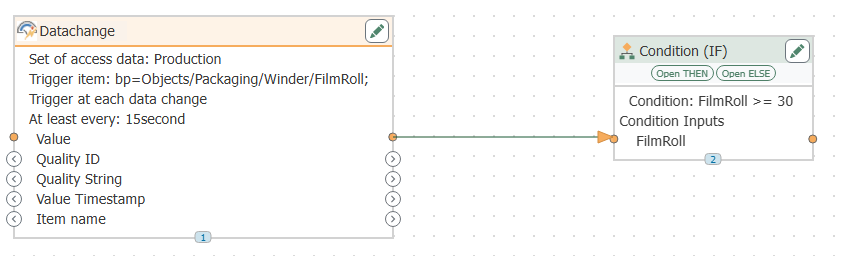
Build the required connections and map the agreed information into the receiving system. Check object references, data types, timestamps, quality information, and reporting behavior against the application requirements.
For control functions, document the supported control behavior and the authorization boundary. Do not assume that a readable data object proves the corresponding operating function is configured or permitted.
The exit criterion is a reproducible configuration that can enter formal testing. Preserve configuration versions and document any manual changes needed to reproduce the result.
Validate behavior
Test normal operation and the failure conditions specified in the acceptance plan. Include communications loss, reconnection, application restart, and stale or invalid data handling where these affect the required function.
Check the receiving application's interpretation, not just the source connection. A value can reach an application while its quality, timestamp, scaling, or operational meaning remains wrong.
The exit criterion is recorded evidence against the agreed requirements. Keep unresolved defects separate from accepted deviations so an open issue does not disappear inside a general test-complete status.
Commission changes
Plan site deployment around the approved work procedure, access arrangements, change authorization, and any required outage. Include backups, rollback instructions, and confirmation of the final running configuration.
Repeat the site-specific acceptance checks that the commissioning plan requires. A successful bench test does not demonstrate that the deployed network paths, permissions, and device configurations match the tested environment.
The exit criterion is operational acceptance by the designated authority. Handover should include the configuration baseline, test records, known limitations, and support ownership.
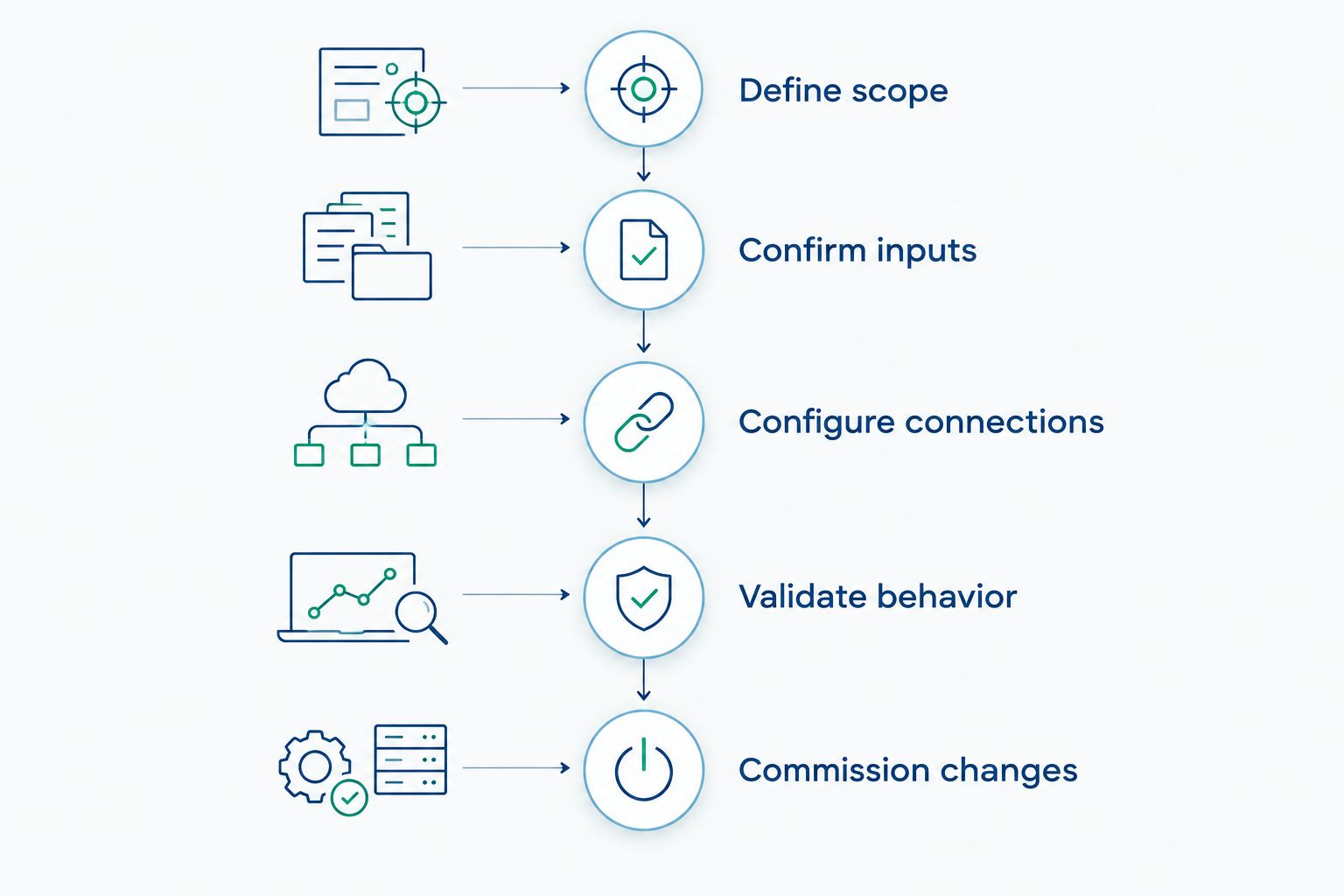
Estimate each work package against its prerequisites and a documented exit criterion.
Use this gate structure in your 2026 planning review to distinguish engineering effort from waiting time. Configuration work can be ready to start while device access, security authorization, or commissioning access remains unresolved.
Why IEC 61850 integration duration varies
The useful schedule drivers are the dependencies you can identify and assign. Review these factors before accepting a delivery commitment:
- Functional scope: Separate monitoring, supervisory control, and protection-related communications. Each needs acceptance criteria appropriate to its operational role.
- Engineering-input quality: Check whether configuration files, device documentation, and the installed baseline agree. Resolve conflicting inputs before treating configuration as a predictable task.
- Device and application behavior: Validate the required services and data interpretation at both ends. Protocol support alone does not establish that the intended workflow is complete.
- Security and network approval: Identify permitted connections, credentials, certificates where applicable, and the responsible approval teams. Put approval dependencies into the schedule.
- Test access: Confirm access to representative devices, configurations, applications, and suitable test conditions. Record what cannot be demonstrated outside the site environment.
- Commissioning constraints: Identify site access, outage requirements, change-control gates, and rollback authority. Separate those calendar dependencies from hands-on engineering effort.
Do not turn these factors into arbitrary contingency percentages. Estimate the actual tasks, identify the unresolved dependencies, and state which conditions must hold for the proposed dates to remain valid.
What security work belongs in the estimate?
Security work belongs in the integration scope before deployment. Identify the communicating endpoints, permitted services, network boundaries, access roles, and configuration-management responsibilities before requesting production access.
For a 2026 security review, document connection direction and purpose rather than requesting broad access between networks. Where the design uses a DMZ or an intermediary system, show the actual communication paths and ownership boundaries.
Use a security acceptance checklist that matches the selected architecture:
- Record which systems initiate connections and which accept them.
- Document authentication and certificate requirements for the implemented services.
- Assign ownership for credential changes and certificate renewal where applicable.
- Define how engineering access is authorized and removed.
- Verify logging and diagnostic access without assuming unrestricted network reachability.
- Include configuration backup and restoration responsibilities.
Network reachability is not a security acceptance criterion by itself. A connection test establishes that a path works under the tested conditions; it does not approve the path or establish that permissions are appropriate.
Avoid treating every IEC 61850 service as the same network requirement. The applicable service, network design, and security controls determine what your IT and OT teams must review.
What should an integration estimate contain?
Ask for a work breakdown that separates deliverables, assumptions, dependencies, and acceptance evidence. A single completion date without those elements gives you no basis for evaluating what changes when a prerequisite slips.
For each work package, request:
- Deliverable: State the configured connection, mapped information, tested function, or commissioning record being produced.
- Prerequisites: List the device access, approved configuration, network access, and decisions needed before work starts.
- Responsible party: Identify who performs the work and who can resolve blocked dependencies.
- Acceptance evidence: Define the test or document that demonstrates completion.
- Calendar constraint: Identify access windows, approvals, and external activities that govern scheduling.
- Change trigger: State which scope or configuration changes require re-estimation.
Your 2026 baseline should distinguish estimated engineering effort from elapsed project duration. Waiting for an approved outage is not configuration effort, but it still affects the deployment date.
When assessing Software Toolbox industrial connectivity software, request confirmation of the exact product, interface, and deployment requirements for your architecture. Do not infer IEC 61850 service coverage, protection suitability, or security behavior from a general product category.
Does monitoring-only scope shorten the integration?
Monitoring-only scope removes command execution from the acceptance boundary, but it does not establish a fixed duration. You still need to validate the required information, communications behavior, security controls, and receiving application.
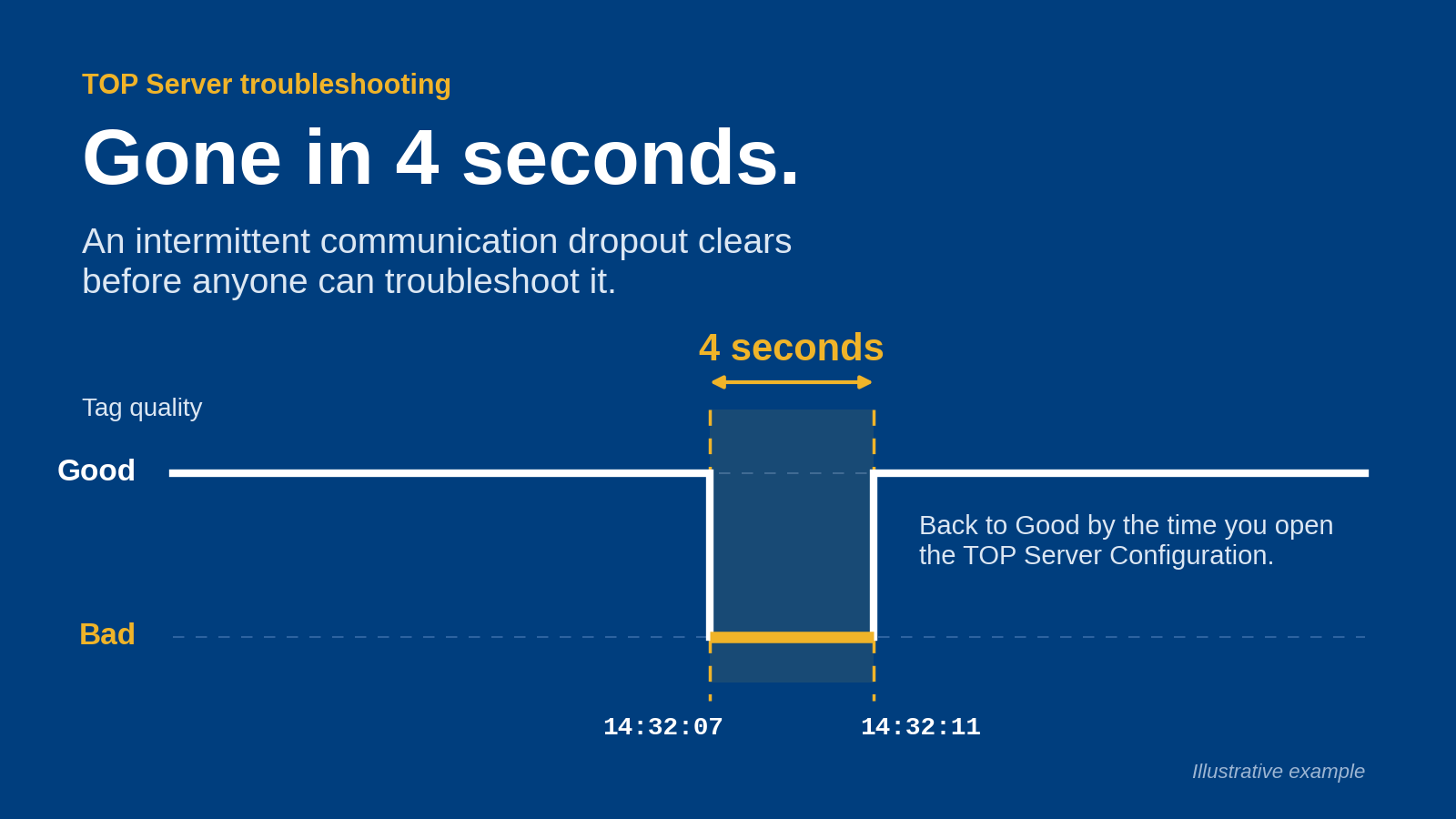
Define what the operator should see when a device disconnects or a value becomes invalid. A monitoring interface that continues displaying an old value without the intended status indication has not met that requirement merely because its initial connection succeeded.
Does using existing configuration eliminate engineering work?
Existing configuration provides a starting point, not automatic acceptance. Check its revision, installed-device alignment, and suitability for the new receiving system before reusing it.
Preserve the original baseline and record changes. Reuse is useful when it reduces repeated engineering without hiding assumptions about device behavior or the deployed network.
Can integration finish before the commissioning window?
Configuration and off-site testing can reach their own completion gates before commissioning when the required test environment is available. Operational completion still depends on the site acceptance criteria.
Name those milestones separately in the schedule. “Ready for commissioning” should mean the prerequisites for site work are satisfied, not that site validation has already occurred.
FAQ
How long does an IEC 61850 integration take in 2026?
An IEC 61850 integration requires a scope-based estimate rather than a universal duration. Build the schedule around engineering inputs, configuration, validation, security approval, and commissioning acceptance.
What's the difference between connection time and commissioning time?
Connection time covers establishing the required communications; commissioning includes the site checks and authorization needed for operational acceptance. A readable value does not establish that the complete deployment is accepted.
Can I estimate the project from the number of devices?
Device quantity alone is insufficient for a defensible estimate. Include the required functions, configuration differences, data mapping, testing obligations, and site constraints.
Do I need SCL files before starting an IEC 61850 integration?
Identify the configuration information required by your selected engineering workflow before work starts. Where SCL files are used, check their revision and alignment with the intended device configuration.
Can I connect the software before cybersecurity approval?
Production connectivity should follow the site's authorization and change-control requirements. Plan approved test access separately rather than assuming that a successful connection authorizes deployment.
Does Software Toolbox software replace substation commissioning?
Selecting Software Toolbox software does not establish substation commissioning acceptance. The project must still satisfy its engineering, testing, security, and operational approval requirements.
What should I ask an integrator before accepting a schedule?
Ask for defined deliverables, prerequisites, acceptance tests, responsible parties, and commissioning dependencies. Require a clear distinction between engineering effort and elapsed project duration.
One last thing
Add a stale-data test to the acceptance plan before approving the schedule. Disconnect the source under controlled, authorized test conditions and verify the receiving application's required behavior: status indication, timestamp interpretation, alarm response, and recovery.
That test checks something a successful first connection cannot: whether the consuming system distinguishes current information from information it should no longer trust. Make the expected result explicit before commissioning, not after an operator reports a misleading display.