Industrial automation systems are increasingly being designed under two constraints: handle more data and consume fewer resources. Designing architectures that meet both demands requires rethinking not just where computation happens, but how software is packaged, deployed, and maintained.
From a sustainability standpoint, much of the design requirements come down to resource efficiency. Energy and materials like rare earth metals aren’t infinite or cheap. Constantly adding new servers or replacing hardware every few years isn’t a great long-term strategy for these resources or for our wallets. Extending the life of what you already have and using resources more efficiently is an effective way to reduce your company’s environmental impact.
That’s where edge computing and containerization come in.
How Edge Computing Helps
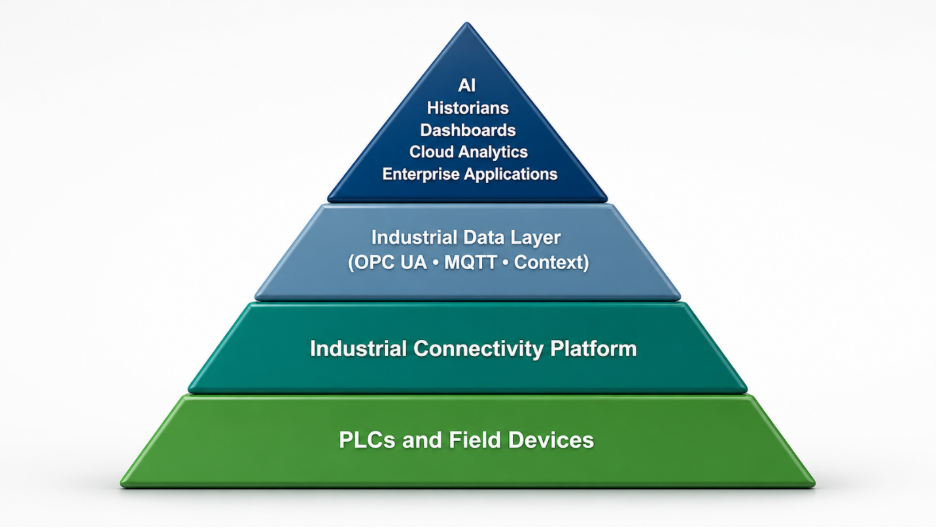
With edge computing, you shift processing closer to the source instead of pushing all raw data upstream. This limits how much data moves so that only what is necessary gets sent upstream. That reduces both bandwidth usage and the energy spent moving and processing data centrally. Edge devices themselves also tend to be lower power and purpose-built, so you’re not running full server infrastructure where you don’t need it. This also lets you add context to data near the source so you're not re-processing or re-contextualizing the same raw data every time it turns up somewhere new
How Containerization Helps
Likewise, containerization allows you to make efficient use of the hardware you are already running on. Instead of spinning up full virtual machines, containers share the host OS and isolate at the application level. Practically speaking, that means less overhead, faster deployment, and the ability to run more workloads on the same device. This reduces the overall number of physical machines required.
One of the biggest advantages, though, is decoupling. Your applications aren’t tightly tied to a specific OS or hardware stack anymore. You can update or swap software without having to touch the underlying system. That’s a significant advantage in industrial environments, because it means you can keep existing hardware in service longer instead of replacing it just to support a new software requirement. Less churn means less e-waste.
Putting It Together with Software Toolbox
When you combine containers with edge deployments, you also get more control over how resources are actually used. You can distribute or centralize workloads without over-provisioning hardware just to handle peak cases. That leads to systems that are not just more efficient, but also more predictable in terms of resource consumption.


Software Toolbox’s product ecosystem is well-aligned with this shift toward containerized, edge-enabled architectures:
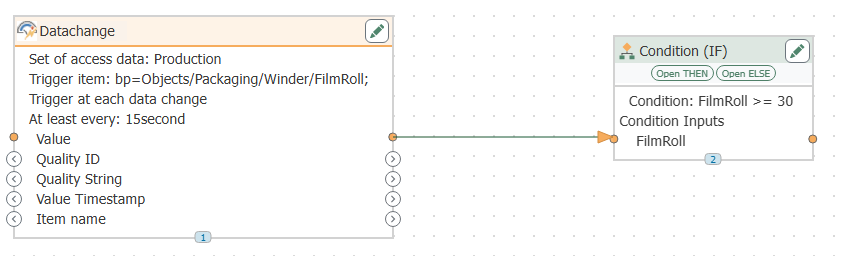
- Running OPC Router in a Docker container gives you a portable integration layer that can live wherever it makes the most sense.
- N3uron’s lightweight, modular approach makes it easy to scale without adding a lot of extra infrastructure.
- Kepware Edge lets you move connectivity and data acquisition closer to the source, which cuts down on unnecessary data movement.
None of this requires a massive redesign to get started. You can introduce containers in specific areas and expand from there. But over time, the impact adds up: fewer machines, lower energy use, longer hardware life-cycles, and a healthier planet.
Reducing resource usage is not just about making systems more efficient. It’s about making them sustainable in a way that holds up operationally.
Ready to get started?
Running OPC Router in a Docker Container
N3uron System Architecture Introduction
Find out more about Kepware Edge in the TOP Server V7 Release Announcement