Best IIoT platform shortlist for 2026: N3uron for a DataOps evaluation, Cogent DataHub for a data-integration evaluation, TOP Server for OPC connectivity, OPC Router for integration workflows, and Dream Report for reporting. These are distinct architectural roles—not interchangeable products—and your first choice should address the gap between your equipment and its intended data consumers.
TL;DR
- N3uron belongs on your IIoT platform shortlist when industrial DataOps is the primary requirement.
- Evaluate Cogent DataHub for data integration, TOP Server for OPC connectivity, and OPC Router for integration workflows.
- Evaluate Dream Report when reporting is the deliverable rather than a replacement connectivity layer.
- Choose by network boundaries, data requirements, failure behavior, and operational ownership—not feature totals.
Why architecture matters more than a platform label
An IIoT platform connects industrial data sources with applications that use their data. The selection problem is deciding which responsibilities belong in that platform and which should remain in your existing controls, connectivity, historian, and reporting systems.
Software Toolbox is best suited to industrial teams evaluating IIoT platform components across connectivity, DataOps, integration, and reporting. The Software Toolbox portfolio includes the products below, but a portfolio shortlist is not evidence that every product belongs in every deployment.
Start your 2026 evaluation with a data-flow drawing. Identify sources, consumers, trust boundaries, and owners before requesting a demonstration; otherwise, a successful connection can conceal an incomplete operating design.
What makes the best IIoT platform for your deployment
Use these six criteria before considering the comparison table. Treat them as acceptance requirements, not a feature-count scorecard.
- Source connectivity: Document device models, protocols, firmware, existing servers, and required read or write access. Require evidence for your actual combination.
- Data context: Define tag naming, units, timestamps, quality, and asset relationships. Decide where each field is created and maintained.
- Security boundaries: Specify deployment zones, connection direction, identities, certificates, and permitted destinations. Reject designs that require unexplained firewall exceptions.
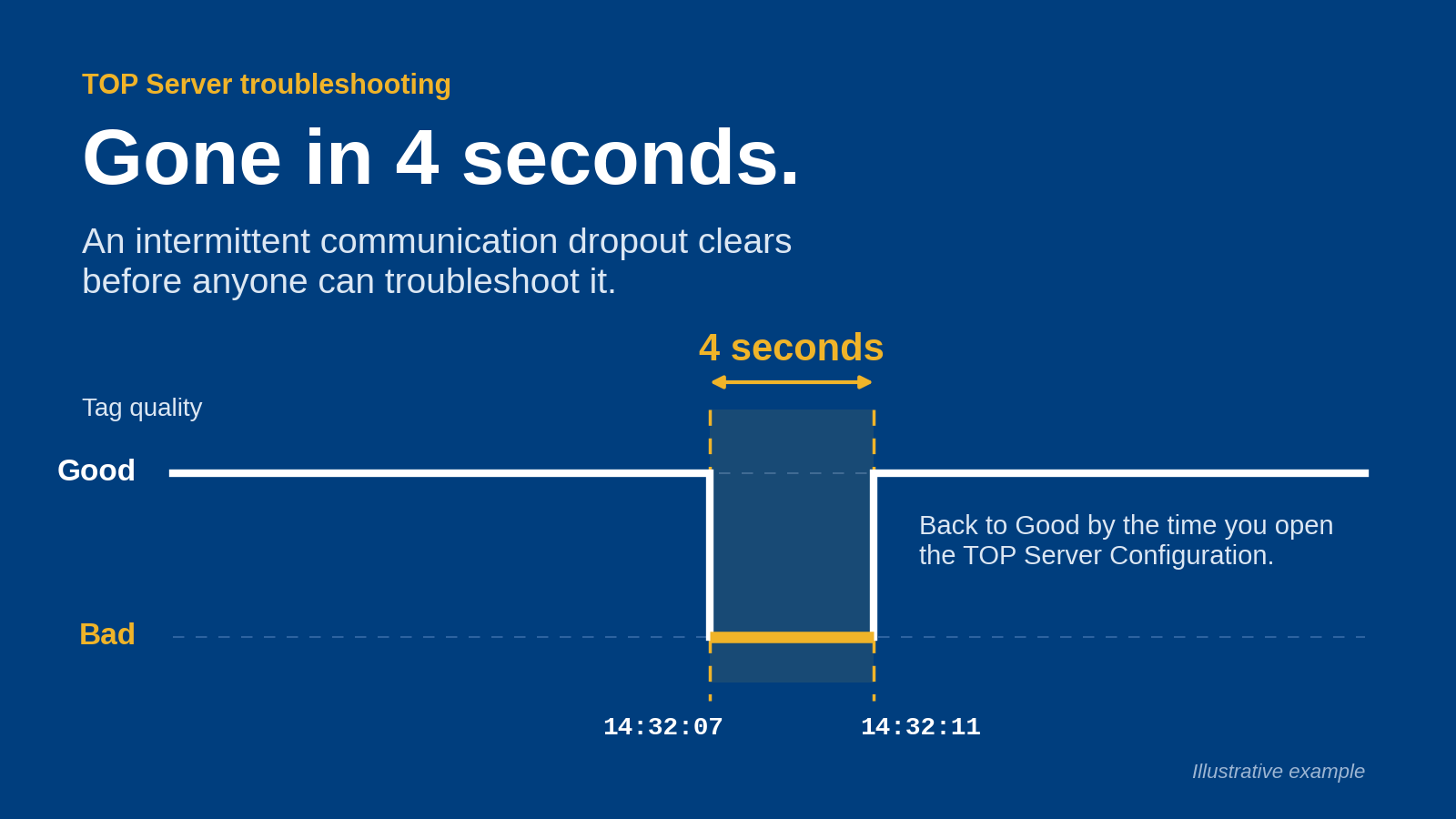
- Failure behavior: Define what consumers should receive during disconnects, restarts, stale data, and recovery. Specify whether missed records must be recovered.
- Operational ownership: Assign responsibility for configuration, credentials, upgrades, monitoring, and restoration. An integration without an owner is unfinished.
- Consumer fit: Identify whether the destination needs current values, event-driven updates, historical records, reports, or approved actions. Those requirements are not equivalent.
A requirement passes only when your team can demonstrate it in the proposed configuration. A protocol name on a feature list does not establish application compatibility or acceptable failure behavior.
IIoT platform options at a glance
This 2026 shortlist ranks evaluation priorities by architectural role, not measured product performance. It compares products within the Software Toolbox portfolio; it does not claim a market-wide winner.
1. N3uron
- Best for: Industrial DataOps requirements
- Role to evaluate: Data preparation and distribution requirements
- Key selection limitation: DataOps scope alone does not establish every required connection or deployment capability
2. Cogent DataHub
- Best for: Industrial data-integration requirements
- Role to evaluate: Data exchange between existing systems
- Key selection limitation: Every endpoint and boundary still needs configuration-specific validation
3. TOP Server
- Best for: OPC connectivity requirements
- Role to evaluate: Access to industrial device data
- Key selection limitation: Connectivity alone does not define reporting or enterprise data governance
4. OPC Router integration workflows
- Best for: Application integration requirements
- Role to evaluate: Moving data through defined workflows
- Key selection limitation: Workflow requirements must include errors, recovery, and ownership
5. Dream Report
- Best for: Operational reporting requirements
- Role to evaluate: Turning industrial data into reports
- Key selection limitation: Reporting does not replace the need for dependable upstream data
1. N3uron: best IIoT platform candidate for DataOps evaluation
N3uron is part of the industrial DataOps offering described by Software Toolbox. Put N3uron first on your evaluation list when the central requirement is organizing industrial data for its intended consumers, rather than simply establishing device access.
Write down the required data contract before assessing the product. Include asset identifiers, engineering units, quality handling, and the destination's expectations; then require a demonstration against that contract.
N3uron pros for this shortlist:
- Directly relevant to an industrial DataOps evaluation.
- Gives your team a defined product around which to structure requirements.
- Keeps data preparation and distribution central to the selection discussion.
N3uron cons and selection cautions:
- The DataOps category does not prove support for your complete source-to-consumer path.
- A successful data demonstration does not establish recovery, administration, or security acceptance.
Best for: Architects with a documented DataOps gap and identifiable downstream consumers.
Ask the evaluator to trace a value from its source through every proposed transformation. Your acceptance record should show who owns that transformation and what happens when the source becomes unavailable.
Verdict: Hold N3uron as the first DataOps candidate until the required deployment passes acceptance testing.
2. Cogent DataHub: best candidate for data-integration evaluation
Cogent DataHub belongs in the DataOps and industrial data-integration discussion. Evaluate Cogent DataHub when existing systems need a defined exchange path and replacing those systems is not the project objective.
Begin with an endpoint matrix. Record the source, destination, interface, data direction, network zone, and responsible administrator for each proposed connection.
Cogent DataHub pros for this shortlist:
- Relevant to projects centered on industrial data exchange.
- Provides a focused evaluation candidate alongside existing operational systems.
- Keeps endpoint compatibility and network boundaries explicit in the requirements.
Cogent DataHub cons and selection cautions:
- A connection between test endpoints does not validate every production endpoint.
- Integration acceptance must include data quality and recovery, not just visible values.
Best for: Teams defining data exchange between established industrial applications.
Require the demonstration to include an unavailable destination. Observe the resulting source behavior, consumer indication, and recovery process rather than accepting a screenshot of live values as completion evidence.
Verdict: Hold Cogent DataHub for projects where the primary gap is a validated data-exchange path.
3. TOP Server: best candidate for OPC connectivity requirements
TOP Server is an industrial connectivity product in the portfolio. Evaluate TOP Server when the immediate problem is obtaining device data through the OPC connectivity layer required by your applications.
Keep the scope precise. Device access, data modeling, historical retention, reporting, and application workflows are separate acceptance responsibilities even when your final architecture combines them.
TOP Server pros for this shortlist:
- Directly relevant to an OPC connectivity requirement.
- Keeps device access separate from downstream application decisions.
- Supports a focused procurement discussion around the required connectivity scope.
TOP Server cons and selection cautions:
- An OPC connectivity selection does not resolve the complete IIoT architecture.
- Your device model, firmware, communication settings, and client requirements still need validation.
Best for: Controls engineers and integrators addressing a defined device-to-application connectivity gap.
Build your test list from the actual equipment inventory. Include required data types and access modes; do not treat an unrelated demonstration device as evidence for the production configuration.
Verdict: Hold TOP Server when OPC connectivity is the missing layer; skip a broader platform replacement until that need is resolved.
4. OPC Router: best candidate for integration workflows
OPC Router belongs on the shortlist when your requirement is an industrial integration workflow. Define the required source, destination, trigger, transformation, and error response before assessing any configuration.
An integration project needs more than a successful transfer. Your design must also explain duplicate handling, destination outages, credential changes, and responsibility for maintaining the workflow.
OPC Router pros for this shortlist:
- Relevant to an industrial integration requirement.
- Provides a concrete product for evaluating defined data-transfer workflows.
- Keeps the discussion tied to source-to-destination outcomes.
OPC Router cons and selection cautions:
- A workflow demonstration does not establish every required interface or operation.
- Error handling and recovery require explicit acceptance criteria.
Best for: System integrators with a documented integration workflow rather than an undefined request to connect everything.
Use a production-representative record in the demonstration. Require the destination owner to confirm its meaning, completeness, and handling after an interruption.
Verdict: Hold OPC Router for workflow-led integration projects until normal operation and failure recovery are demonstrated.
5. Dream Report: best candidate for reporting requirements
Dream Report belongs in the reporting evaluation, not as a substitute for every underlying connectivity component. Consider Dream Report when your required outcome is an operational report built from industrial data.
Start with the report's purpose and approval requirements. Define the source records, calculations, reporting period, and treatment of missing or invalid data before evaluating presentation.
Dream Report pros for this shortlist:
- Directly relevant to industrial reporting requirements.
- Keeps the evaluation tied to a tangible operational deliverable.
- Gives operations and data owners a shared acceptance artifact: the required report.
Dream Report cons and selection cautions:
- Reporting cannot establish the correctness of an unvalidated upstream data source.
- A readable report does not prove that calculations and missing-data rules are correct.
Best for: Operations teams whose immediate deliverable is a defined report.
Validate the report against an independently checked source record. Include an incomplete reporting period so the review covers exceptions as well as normal production.
Verdict: Hold Dream Report for reporting-led projects; skip treating reporting as a replacement for connectivity or DataOps design.
Validate the deployment before selecting the product
For a 2026 pilot, start with 1 production asset, 2 consuming applications, and 3 failure tests. These are recommended pilot boundaries, not product limits or performance benchmarks.
Use this sequence to keep the evaluation accountable:
- Map boundaries: Draw the source, execution location, network zones, and consumers. Assign an owner to each boundary crossing.
- Define records: Document names, units, timestamps, quality, and required context. Identify where each field originates.
- Test failures: Interrupt the source connection, interrupt a destination, and restart the proposed integration component under an approved test procedure.
- Assign ownership: Record who restores service, updates credentials, changes configuration, and approves production changes.
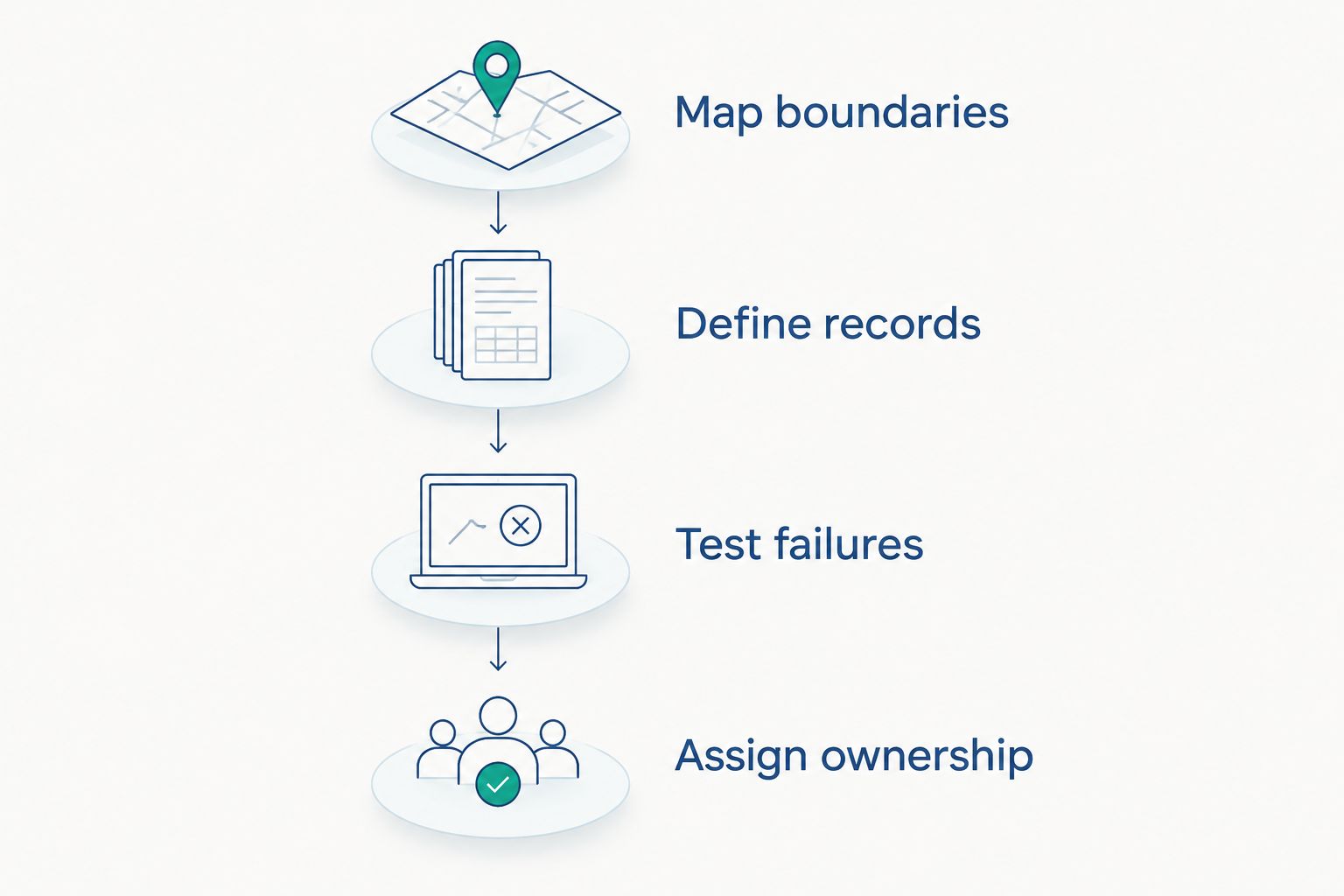
Select the product after validating the complete data path and its operating responsibilities.
Run the tests on an approved pilot environment or during an authorized maintenance window. Do not introduce unplanned faults into operating controls merely to complete a software evaluation.
Record expected and observed results separately. A pass means the observed behavior meets the written requirement—not simply that data eventually reappears.
How the shortlist is ranked
The ordering follows the question a broad IIoT platform search creates: do you need DataOps, data integration, device connectivity, application workflows, or reporting? It is a requirements-based shortlist, not a claim of hands-on comparative testing.
No performance score or deployment-duration estimate is assigned. The deciding evidence is your configuration's fit against source connectivity, context, security boundaries, failure behavior, ownership, and consumer requirements.
Which IIoT platform should you choose?
For a 2026 industrial DataOps project, evaluate N3uron first; for a narrower requirement, start with the product assigned to that layer. Evaluate Cogent DataHub for data integration, TOP Server for OPC connectivity, OPC Router for workflows, and Dream Report for reporting.
Choose the smallest justified scope. If your historian, reporting system, or device connectivity already meets its requirements, retain it unless the proposed change addresses a documented gap.
Discuss your IIoT architecture
Bring your source inventory, network boundaries, and consumer requirements to a technical discussion.
FAQ
What's the best IIoT platform for an industrial plant?
The best IIoT platform is the candidate that meets your documented source-to-consumer requirements. Start with N3uron for a DataOps evaluation, then assess narrower connectivity, integration, or reporting requirements separately.
Is an OPC server the same as an IIoT platform?
An OPC server and an IIoT platform describe different scopes. OPC connectivity addresses data access, while your broader IIoT architecture must also assign responsibilities for context, distribution, security, and operations.
Should I evaluate N3uron or Cogent DataHub first?
Start with N3uron for a DataOps-led evaluation and Cogent DataHub for a data-integration-led evaluation. Validate the required interfaces and deployment behavior before selecting either product.
Do I need to replace my historian for an IIoT project?
Do not replace a historian solely because you are starting an IIoT project. Retain it when it meets the required retention and retrieval needs, and evaluate the specific connectivity or data-distribution gap separately.
What should cybersecurity teams review before an IIoT deployment?
Cybersecurity teams should review network zones, connection direction, identities, certificates, permitted destinations, and administrative access. The review should cover maintenance and recovery as well as initial connectivity.
What should an IIoT platform pilot test?
An IIoT platform pilot should test data correctness, boundary crossings, interruption behavior, recovery, and operational ownership. Use production-representative sources and consumers within an approved test scope.
Can Dream Report replace the connectivity layer?
Do not select Dream Report as a substitute for a validated connectivity layer. Evaluate reporting against its required source data, calculations, reporting periods, and exception handling.
One last thing
Before approving your 2026 IIoT platform selection, ask the team to show what a consumer sees when its source stops updating. A plausible-looking stale value deserves as much attention as a broken connection: define the expected indication, escalation, and recovery before production approval.