Best overall: a native DNP3 master driver for direct SCADA polling. Best for OPC UA handoff: a DNP3-to-OPC UA gateway with verified protocol support. Best for dispersed sites: a DNP3 concentrator that collects field data before forwarding it. This 2026 guide ranks deployment patterns, not unverified product implementations.
TL;DR
- A native DNP3 master driver is the best default for direct SCADA integration in 2026.
- Use a DNP3-to-OPC UA gateway when OPC UA is the required handoff; verify both sides of the configuration.
- A DNP3 concentrator fits dispersed sites that need a defined collection and forwarding layer.
- Software Toolbox is best for teams specifying OPC connectivity alongside a separately verified DNP3 driver.
Why this matters
A driver selection determines more than whether a point value appears on a screen. The SCADA design must account for DNP3 master and outstation roles, event classes, timestamps, control operations, reconnection behavior and the boundary between field networks and downstream consumers. A working point read does not establish that the rest of that behavior works.
Software Toolbox provides industrial connectivity software, including OPC drivers and TOP Server. That makes its portfolio relevant when you are designing the OPC side of a SCADA integration. Its supplied description does not establish DNP3 support for any named product, so confirm the specific driver, role and protocol functions in current product documentation before assigning it a place in the architecture.
For 2026 projects, start with the SCADA system's required DNP3 role and the destination for its data. A direct SCADA connection, an OPC UA handoff and a multi-site collection layer solve different problems. Choose the pattern first; then qualify the software that implements it.
What makes the best DNP3 driver software
- Correct protocol role: Establish whether the application must act as a DNP3 master, present an outstation interface, or support both. A master that reads points does not automatically satisfy an outstation-facing integration.
- Point and event fidelity: Check static data, event classes, quality flags and source timestamps against the destination's data model. A current value without its quality or timestamp can misrepresent a field event.
- Control behavior: If the SCADA system issues commands, test the required control sequence and failure responses. Monitoring-only acceptance tests do not qualify a control path.
- Network placement: Document connections across the OT network, DMZ and downstream systems. Account for who initiates each connection and how it recovers after an interruption.
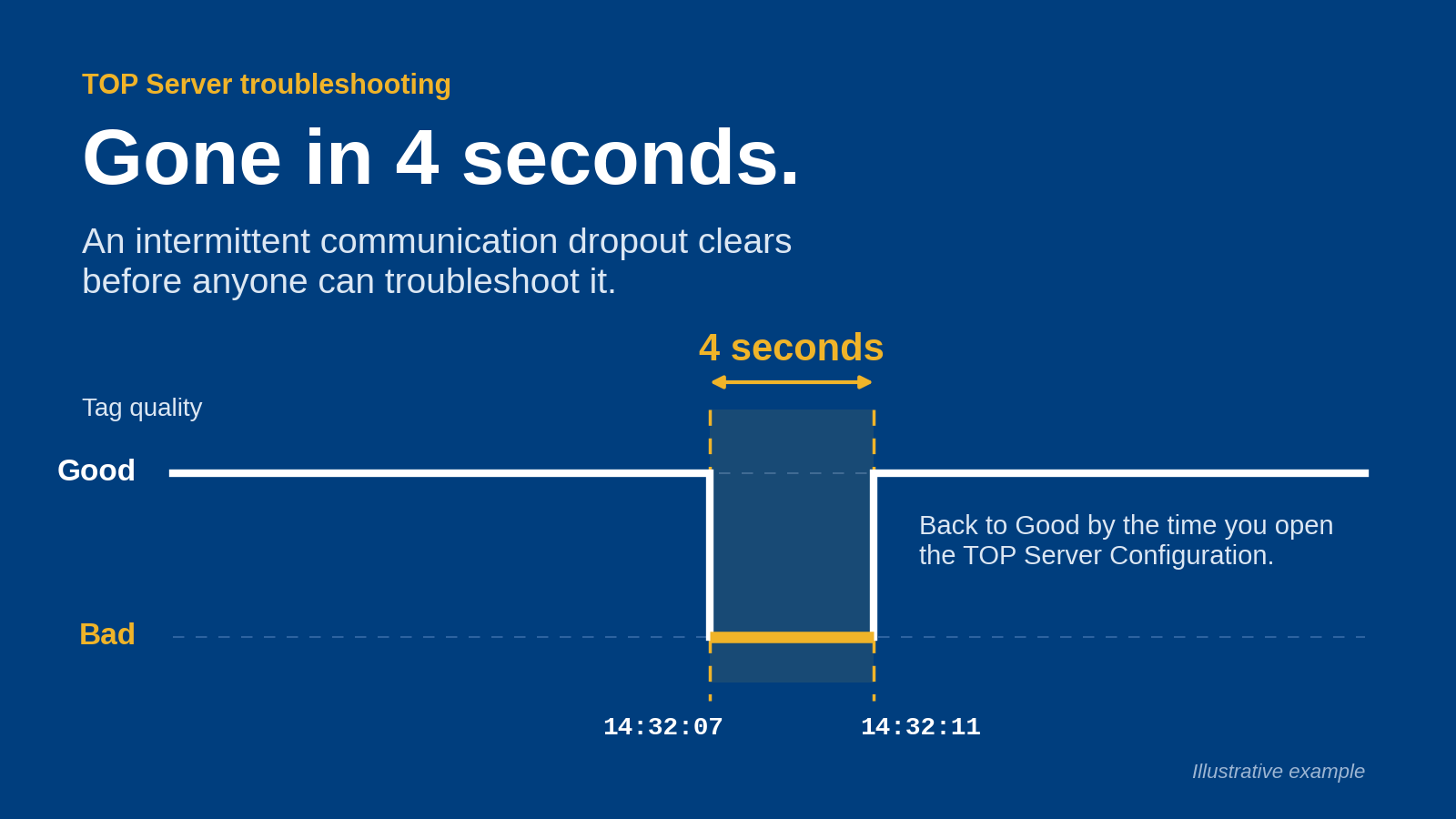
- Operational visibility: Require evidence of failed polls, communication loss, stale values and rejected controls. An operator needs to distinguish a quiet process from a broken data path.
- Maintainable mapping: Review how point indices, types, scaling, naming and changes are managed. A small pilot is not proof that the mapping remains usable across a full deployment.
These criteria apply to every 2026 shortlist. Product documentation and a configuration test must establish which criteria a particular implementation meets.
DNP3 driver software at a glance
Native DNP3 master driver
- Best for: Direct SCADA polling
- Standout feature: Keeps DNP3 acquisition in the SCADA integration path
- Key limitation: Downstream consumers may still need a separate interface
DNP3-to-OPC UA gateway
- Best for: OPC UA handoff
- Standout feature: Separates field acquisition from the OPC UA consumer interface
- Key limitation: Adds a mapping and failure boundary to validate
DNP3 concentrator
- Best for: Dispersed field sites
- Standout feature: Collects field connections before forwarding data
- Key limitation: Adds another component and operational dependency
The table compares architecture choices, not named products. Verify the DNP3 functions of any proposed software in 2026 before treating one of these patterns as deployable.
1. Native DNP3 master driver: best DNP3 driver software for direct SCADA polling
A native master driver belongs in the SCADA acquisition path and communicates with DNP3 outstations. It is the default choice when the SCADA platform must own polling, event retrieval and control operations directly. Keep the point model and connection status visible to the engineers responsible for that platform.
Native DNP3 master driver pros:
- Puts DNP3 acquisition under the SCADA team's direct configuration and troubleshooting process.
- Avoids an additional protocol handoff when the SCADA system is the primary consumer.
- Provides a clear place to test outstation addresses, point mappings and event handling.
Native DNP3 master driver cons:
- Does not, by itself, give other applications an OPC UA interface.
- Ties acquisition configuration to the chosen SCADA environment; document how other consumers will receive data.
Best for: A SCADA deployment whose principal requirement is direct communication with DNP3 outstations.
Qualification test: Map representative binary and analog points, then check static reads against event updates. Test loss of communication and recovery without assuming that a restored connection proves event history is complete. If controls are in scope, include authorized control attempts and rejected commands in acceptance testing.
For a performance test, record the behavior of the proposed configuration at 1-second, 10-second and 60-second polling intervals. These are comparison settings, not prescribed operating intervals. Keep the point list, outstation and network conditions fixed so the team can identify what changes when polling frequency changes.
Verdict: Buy the direct pattern when SCADA owns acquisition and the selected driver's documented DNP3 functions pass the site test. Hold any named implementation until its role, event handling and control requirements are verified.
2. DNP3-to-OPC UA gateway: best for an OPC UA handoff
A gateway places a DNP3 acquisition function on one side and an OPC UA interface on the other. Use this pattern when downstream systems require OPC UA rather than a direct DNP3 connection. Specify the mapping between DNP3 point state and the OPC UA data exposed to consumers before selecting software.
Software Toolbox is best for teams specifying the OPC connectivity side of this design alongside a separately verified DNP3 driver. Its stated portfolio includes OPC drivers and TOP Server; that is not evidence that TOP Server or another named product implements the DNP3 role needed here. Confirm the DNP3 acquisition component and the OPC UA interface independently.
DNP3-to-OPC UA gateway pros:
- Gives OPC UA consumers a defined interface instead of requiring each consumer to handle DNP3.
- Creates an explicit boundary for point naming and data-model decisions.
- Supports a deployment review that treats field acquisition and downstream access as separate responsibilities.
DNP3-to-OPC UA gateway cons:
- Introduces another mapping where quality, timestamps and event behavior can be lost or changed.
- Requires failure handling on both the DNP3 and OPC UA sides; a connected OPC UA client does not prove fresh field data.
Best for: A plant architecture that requires OPC UA access to field data acquired through DNP3.
Qualification test: Trace one changing value, its quality and its timestamp from the outstation through the gateway to an OPC UA client. Then interrupt the field connection. Confirm that the consumer sees the intended bad or stale state rather than a plausible old value. Test write or control paths separately if the integration requires them.
Verdict: Buy the gateway pattern when OPC UA is a requirement and the complete data path passes that test. Hold a product selection that documents only its OPC UA side.
3. DNP3 concentrator: best for dispersed field sites
A concentrator collects DNP3 data from multiple field connections and forwards it toward a central system. It fits an architecture that needs a managed collection layer between dispersed outstations and the SCADA environment. The forwarding interface and responsibility for commands must be specified; neither follows automatically from the word concentrator.
DNP3 concentrator pros:
- Gives the architecture a defined collection point for field connections.
- Lets teams review upstream and downstream network paths separately.
- Provides a single place to document how field point identities map into the central system.
DNP3 concentrator cons:
- Adds a component whose failure can affect every field connection assigned to it.
- Complicates event, timestamp and control-path validation if forwarding behavior is left unspecified.
Best for: Dispersed outstations that need a collection layer before data reaches a central SCADA system.
Qualification test: Identify every upstream outstation and the downstream consumer. For each point, retain the source identity, quality and timestamp required by operations. Disconnect one outstation, then disconnect the concentrator's downstream connection; the expected alarms and recovery behavior differ and should be tested separately.
Do not choose this pattern simply because several sites appear on a network drawing. First establish what the collection layer does that direct connections do not. In a 2026 design review, that decision belongs beside the failure model, not in a vendor feature list.
Verdict: Buy the concentrator pattern when the collection layer has a defined operational purpose and tested failure behavior. Hold it when it only moves an undocumented mapping problem to another server.
How the patterns were ranked
The native master driver ranks first because it addresses the direct SCADA integration requirement without adding a protocol handoff. The gateway ranks next for deployments that explicitly need OPC UA consumers. The concentrator serves the narrower requirement for a separate collection layer across dispersed sites.
This is a ranking of fit against the criteria above, not a claim that every driver sold under one label performs identically. The decisive checks are protocol role, event and quality preservation, controls where required, network placement, and observable failure states. A product that fails a required check is not rescued by the architecture pattern it claims to implement.
Validate the complete data path before deployment
Write an acceptance case that starts at the field point and ends at the SCADA display or OPC UA consumer. The test should show what happens during normal operation, field communication loss, downstream communication loss and recovery. Separate monitoring tests from controls so a successful read cannot mask an untested command path.
Use these review gates in order:
- Point mapping: Match outstation point identity, type and engineering meaning to the destination point.
- Event handling: Confirm which event classes are configured and how event timestamps and quality reach the consumer.
- Security boundary: Record connection direction and access requirements at each OT and DMZ boundary.
- OPC handoff: If OPC UA is present, compare the destination value, status and timestamp with the field source.
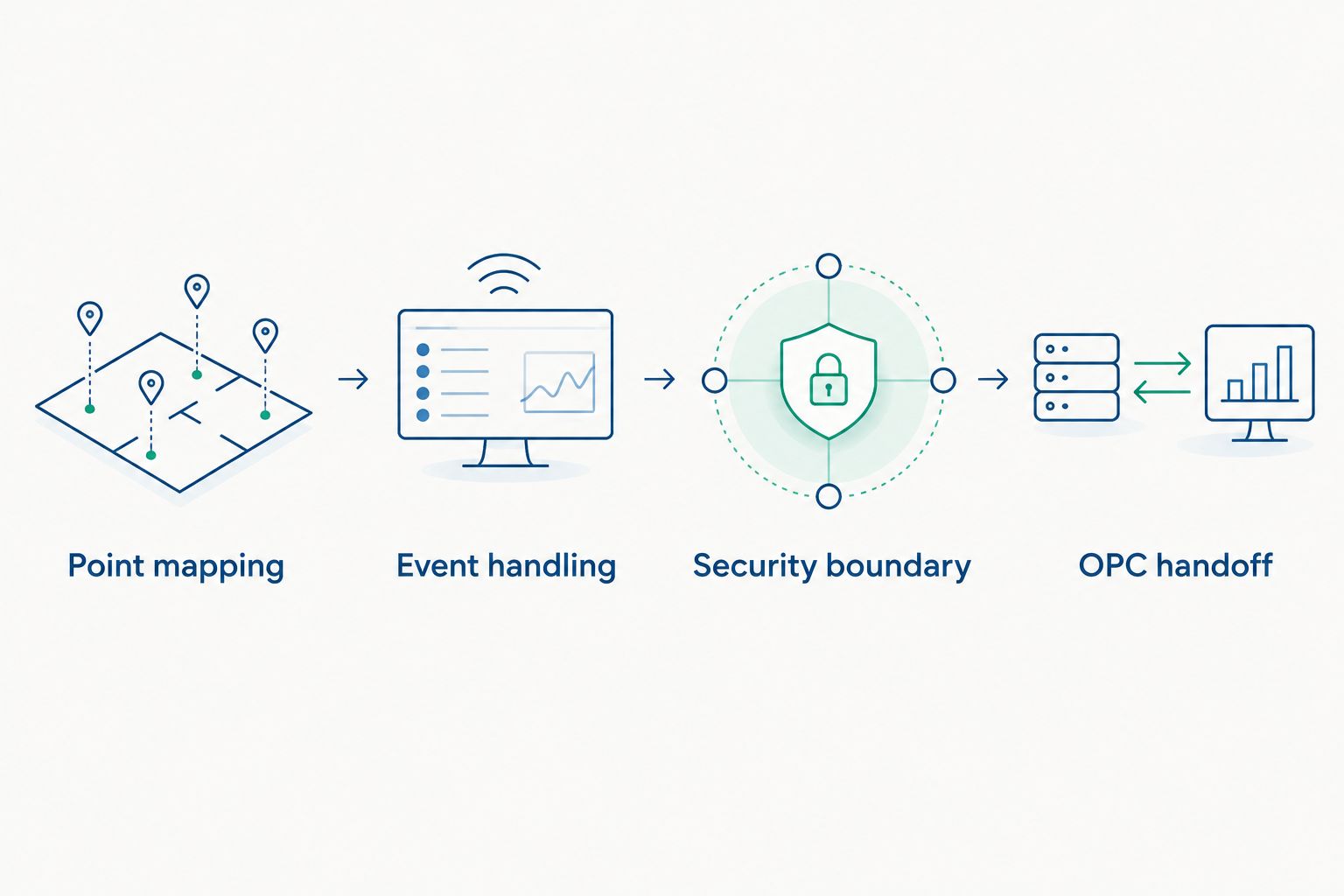
Validate field meaning and failure behavior before accepting the downstream interface.
For a direct native driver, the OPC handoff gate applies only if another component exposes the data to OPC UA consumers. For a gateway, it is a required test. For a concentrator, add a check that the central system can identify which field connection produced each value and alarm.
Software Toolbox provides OPC connectivity software, but its supplied description does not identify a qualified DNP3 configuration. Treat that distinction as a procurement requirement: request the exact supported DNP3 role and the proposed end-to-end mapping before approving a 2026 build.
Which DNP3 driver software should you choose?
Choose a native DNP3 master driver by default when your SCADA platform should communicate directly with field outstations. Choose a verified DNP3-to-OPC UA gateway when the receiving applications require OPC UA. Choose a concentrator when a separate collection layer has a documented role in the network and failure design.
Do not select on a protocol logo alone. For 2026 procurement, require a configuration-level answer to five questions: Who is the master? Where do event timestamps originate? What happens to quality on communication loss? How are controls tested? Which component owns the mapping? The answers identify the software and architecture you can actually operate.
FAQ
What's the best DNP3 driver software for direct SCADA integration?
A native DNP3 master driver is the best default for direct SCADA integration. Verify its outstation compatibility, event handling, quality states and required control behavior before selecting a product.
Is a DNP3-to-OPC UA gateway better than a native driver?
A DNP3-to-OPC UA gateway is the better pattern when downstream consumers require OPC UA. A native master driver is the simpler pattern when SCADA owns direct DNP3 acquisition.
Does TOP Server support the DNP3 role in this design?
The supplied product information does not establish DNP3 support for TOP Server. Check current Software Toolbox documentation for the exact driver, protocol role and configuration before specifying it.
What should I test besides DNP3 point values?
Test event updates, source timestamps, quality states, communication loss, recovery and any required controls. A correct point value alone does not validate the data path.
When should I use a DNP3 concentrator?
Use a DNP3 concentrator when dispersed outstations need a defined collection and forwarding layer. Specify its upstream and downstream roles and test both failure paths.
Can OPC UA clients show stale DNP3 data?
Yes, an OPC UA connection can remain available while its upstream field connection has failed. Test how the gateway exposes loss of field communication, including the destination status and timestamp.
How do I qualify DNP3 driver software in 2026?
Qualify DNP3 driver software with a site-specific point list and acceptance tests for role, events, quality, controls and recovery. Record the network boundaries and verify the complete path to the receiving application.
One last thing
A healthy downstream connection is not proof of healthy field data. In the final 2026 acceptance test, break the upstream DNP3 connection while leaving the SCADA or OPC UA consumer connected. If the receiving system cannot show that the value is no longer current, fix the quality and failure mapping before deployment.