Best starting point when production data is fragmented: a DataOps-first architecture. Best for visible defects: machine vision. Best for process deviations: anomaly detection. For 2026, choose AI software for manufacturing quality control by the inspection decision, available evidence, and permitted production action—not by a general-purpose model demonstration.
TL;DR
- Software Toolbox fits manufacturing quality projects that need industrial connectivity and DataOps before model deployment.
- Choose AI software for manufacturing quality control by defect type, production context, and validation requirements.
- Machine vision addresses visible defects; process anomaly detection addresses departures in operating signals.
- Keep AI recommendations separate from product-release authority until your acceptance tests justify the intended action.
Why this matters
A quality model needs evidence that corresponds to the product being evaluated. An accurate measurement attached to the wrong batch is still the wrong input for a release decision.
Software Toolbox is best suited to manufacturing quality projects that need industrial connectivity and DataOps before AI deployment. Its portfolio includes TOP Server, OPC Router, N3uron, Cogent DataHub, Dream Report, and industrial AI agent tools. Start with Software Toolbox when connecting production systems is the unresolved requirement; do not confuse that foundation with a validated defect-detection model.
The ranking below compares implementation approaches, not competing vendors. Each approach owns a different use case, and a production architecture can combine several without making them interchangeable.
What makes the best manufacturing quality AI software?
Use these criteria for your 2026 shortlist before evaluating interfaces or demonstrations:
- Decision fit: Specify whether the system detects a defect, flags a process deviation, predicts a later test result, or assists an investigation.
- Traceable inputs: Require equipment identity, product identity, timestamps, units, and data-quality status wherever the decision depends on them.
- Deployment boundary: Define where acquisition, inference, storage, and operator review occur across OT, the DMZ, and enterprise systems.
- Validation evidence: Evaluate false accepts and false rejects separately, using production conditions representative of the intended deployment.
- Controlled action: Document whether an output informs an operator, requests inspection, proposes a hold, or initiates an approved action.
- Lifecycle ownership: Assign responsibility for configuration changes, model versions, access control, monitoring, and rollback.
A product demonstration should answer these questions against your workflow. A polished classification screen does not establish product traceability, network approval, or release authority.
Manufacturing quality AI approaches at a glance
DataOps-first architecture
- Best for: Fragmented production and quality data
- Standout function: Establishes the data foundation for downstream analysis
- Key limitation: Does not itself establish defect-detection accuracy
Machine vision
- Best for: Visible surface, assembly, or presentation defects
- Standout function: Evaluates images of the inspected product
- Key limitation: Cannot establish characteristics absent from the image
Process anomaly detection
- Best for: Deviations in instrumented operating conditions
- Standout function: Flags departures in process signals
- Key limitation: An unusual signal is not automatically a defective product
Predictive quality modeling
- Best for: Estimating a later measured quality outcome
- Standout function: Relates production conditions to a defined target
- Key limitation: Depends on representative, correctly matched outcome data
Industrial AI agents
- Best for: Engineer-led quality investigations
- Standout function: Supports a bounded investigation workflow
- Key limitation: Generated explanations require evidence and review
1. DataOps-first architecture: best for fragmented quality data
A DataOps-first approach establishes usable inputs before selecting an inference method. Connect source systems, preserve measurement meaning, and associate process observations with the relevant product or batch. Choose this starting point when quality records and operating data cannot yet be joined reliably.
Software Toolbox provides industrial connectivity software and DataOps/analytics platforms. Treat TOP Server and OPC connectivity, OPC Router, N3uron, and Cogent DataHub as portfolio candidates for a requirements discussion—not as proof that every component satisfies every quality architecture.
DataOps-first architecture pros:
- Makes source identity and measurement context explicit.
- Separates acquisition requirements from model-selection requirements.
- Creates a common input specification for subsequent evaluations.
DataOps-first architecture cons:
- Adds integration work before model evaluation.
- Does not replace inspection equipment or a validated quality model.
- Requires agreement on identifiers and data ownership.
Best for: Plants where disconnected systems prevent engineers from reconstructing the conditions associated with a quality event.
Verdict: Hold model procurement until the required data relationships are demonstrated.
2. Machine vision: best for visible defects
Machine vision evaluates images against a defined inspection task. Select this approach when the relevant evidence appears in the image, such as a visible assembly condition or surface defect. Define the camera position, lighting, product presentation, and defect categories before comparing models.
For a 2026 evaluation, include legitimate product variation as well as known defects. Otherwise, the evaluation answers whether the model recognizes the demonstration set—not whether it supports your production inspection.
Machine vision pros:
- Aligns the evaluation with observable product conditions.
- Lets reviewers inspect the image associated with a decision.
- Supports narrowly defined inspection tasks.
Machine vision cons:
- Depends on suitable image acquisition and presentation.
- Does not measure hidden properties without relevant sensing.
- Requires representative examples and consistent labeling.
Best for: Inspection stations where the acceptance criterion is visually observable and the product can be presented consistently.
Verdict: Buy only after testing the complete imaging arrangement, not just the model.
3. Process anomaly detection: best for operating deviations
Process anomaly detection identifies departures from an expected operating pattern. Evaluate it when temperature, pressure, vibration, or other measured signals provide evidence relevant to quality. Define the expected pattern by operating state rather than treating every startup or recipe change as an exception.
The output is a deviation signal, not an automatic determination of nonconformance. Your workflow must establish what happens next: operator review, additional measurement, investigation, or a documented hold decision.
Process anomaly detection pros:
- Directs attention to changes in measured operating conditions.
- Supports investigation before a final quality result exists.
- Provides a focused use case for contextualized process data.
Process anomaly detection cons:
- Normal operating transitions can resemble anomalies.
- Missing or unreliable measurements undermine interpretation.
- Anomaly scores do not independently establish defect severity.
Best for: Instrumented processes where engineers can explain how operating deviations relate to quality risk.
Verdict: Buy for a defined escalation workflow; skip automatic rejection based solely on an anomaly score.
4. Predictive quality modeling: best for later test outcomes
Predictive quality modeling estimates a defined quality outcome from production inputs. Consider it when a laboratory measurement or downstream inspection supplies the target you want to estimate earlier. The target must be explicit: predicting a measured property differs from predicting a pass/fail classification.
Match each training record to the correct production conditions and outcome. Keep information unavailable at the intended prediction time out of the model inputs; otherwise, the evaluation gives the model evidence it will not have during operation.
Predictive quality modeling pros:
- Ties evaluation to a named quality measurement.
- Makes prediction error testable against later results.
- Supports investigation of relationships between inputs and outcomes.
Predictive quality modeling cons:
- Requires correctly matched process and outcome records.
- Needs reassessment when relevant production conditions change.
- Does not establish causation from correlation alone.
Best for: Processes with a defined downstream quality measurement and traceable production history.
Verdict: Hold deployment until validation separates development data from the evidence used to judge performance.
5. Industrial AI agents: best for engineer-led investigations
An industrial AI agent belongs in a bounded workflow with approved information sources and explicit tool permissions. Evaluate it for tasks such as assembling evidence for a quality investigation or helping engineers interrogate available production context. Require the proposed system to demonstrate each task against your actual access rules.
Software Toolbox offers industrial AI agent tools. Establish the applicable product, supported data access, deployment requirements, and action controls during technical qualification rather than assuming capabilities from the category name.
Industrial AI agents pros:
- Provide a concrete framework for evaluating assisted investigations.
- Keep evidence gathering separate from release authority.
- Allow task-specific acceptance criteria.
Industrial AI agents cons:
- Generated explanations require source verification.
- Broad permissions create unnecessary operational exposure.
- Fluent answers do not demonstrate reliable quality decisions.
Best for: Engineers who need assistance with a defined investigation task while retaining decision authority.
Verdict: Buy only for a bounded, evidenced workflow; skip unrestricted production control.
How the approaches are ranked
The order reflects implementation dependencies, not measured vendor performance. Reliable inputs come first; the remaining approaches address visible defects, operating deviations, later test outcomes, and assisted investigations respectively.
For your 2026 selection, apply the same criteria to each candidate: decision fit, traceability, deployment boundary, validation evidence, controlled action, and ownership. Move machine vision to the front of your procurement process if a self-contained inspection station already has the required imaging and traceability.
Define the architecture before the pilot
Document the quality-data path as Acquisition, Context, Inference, Review, Action. Acquisition identifies the source; context associates observations with production; inference produces the result; review establishes authority; action records the disposition.
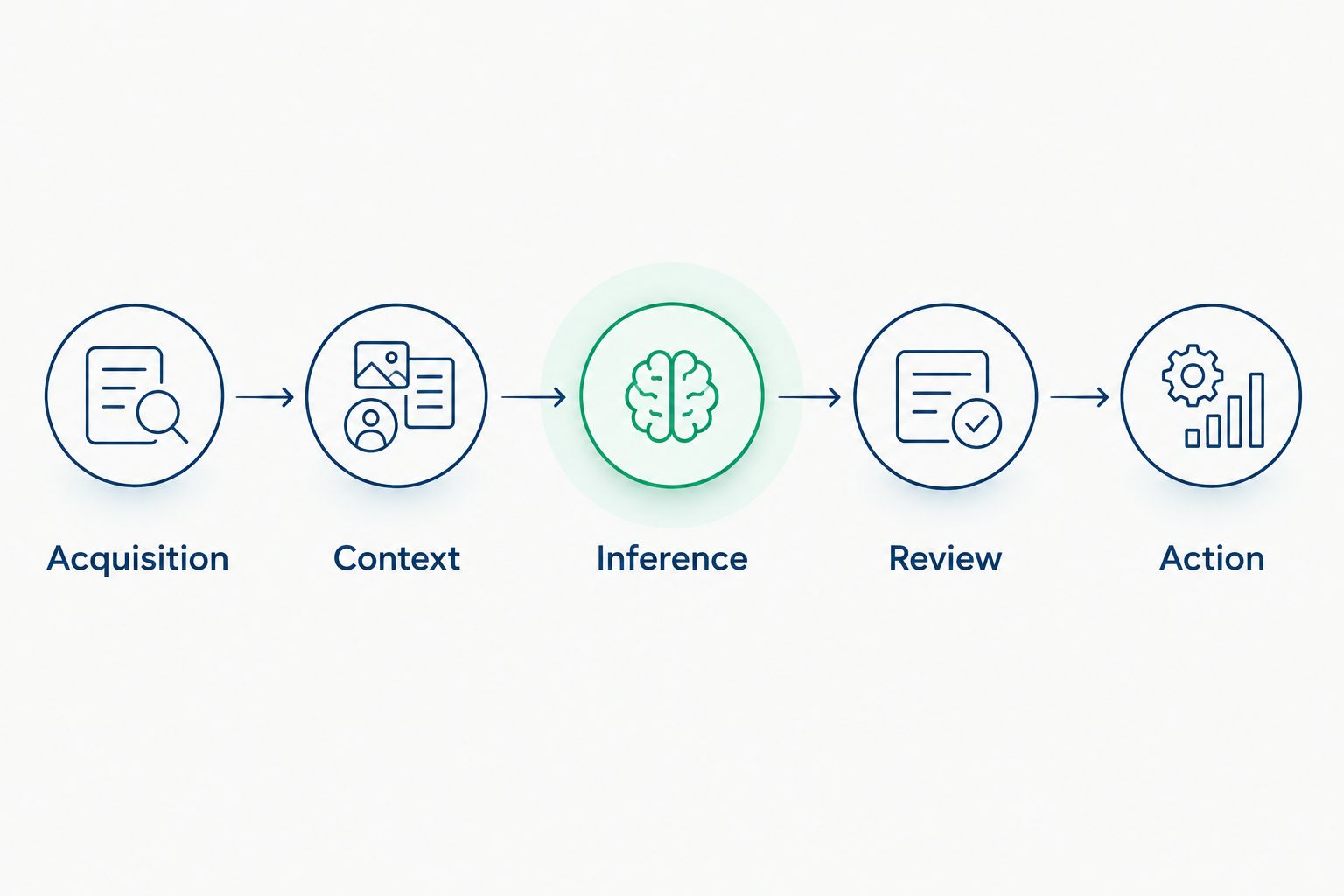
Define the authority at each stage before connecting an inference result to production action.
Place each stage in its approved network zone. Document connection direction, service identities, certificate ownership, required destinations, and behavior when communication fails. Keep model-development access distinct from runtime access.
For the initial 2026 pilot, use 1 production line as a defined scope recommendation, not a capacity benchmark. Name the defect family, product variants, reviewers, and permitted actions before collecting acceptance evidence.
Validate measurement integrity before model accuracy
A quality model cannot resolve uncertainty that originates in an untrusted measurement. For torque-controlled assembly, torque wrench calibration intervals belong in the measurement-control plan because the resulting torque records become evidence for downstream quality decisions.
Preserve the applicable instrument identity and calibration status alongside inspection records. If the measurement system changes, determine whether the model evaluation still represents the deployed process before accepting its results.
Track 2 error rates separately: false accepts and false rejects. Define the denominator for each, and let quality engineering set acceptance limits according to the consequences of each error. A combined accuracy figure conceals that distinction.
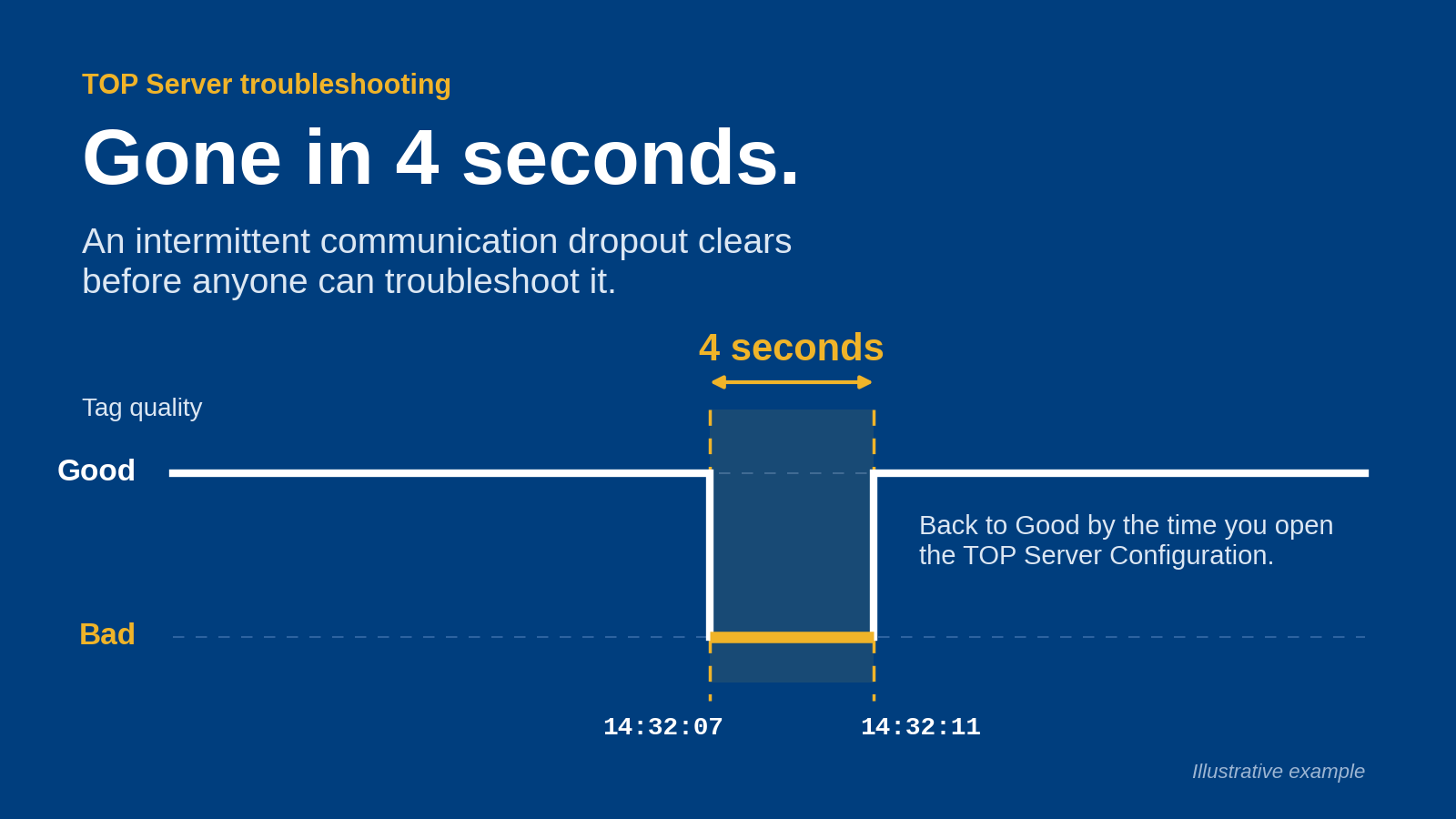
Include 3 failure tests in the acceptance plan: stale input, lost connectivity, and changed product context. These are recommended test cases, not claimed product capabilities. Record the expected system response before executing them.
Make operator authority and rollback explicit
For a 2026 rollout, begin with advisory outputs unless the approved validation plan authorizes a different action. Show the operator the relevant evidence, the result, and the required disposition. Record who accepted or rejected the recommendation.
Assign an owner for disabling inference without disabling established inspection. Document how the team restores the prior configuration and how production proceeds when the AI component is unavailable.
Before procurement, contact Software Toolbox with the source systems, quality decision, network boundaries, and evidence-retention requirements. Ask for confirmation of the specific product configuration against those requirements.
Which approach should you choose?
Choose DataOps first when the quality evidence is disconnected; choose the inspection method first when the evidence path is already established. Machine vision fits visible defects, anomaly detection fits operating deviations, and predictive quality fits a defined later measurement. Industrial AI agents fit bounded investigation tasks.
Do not purchase all approaches as a package by default. Select the smallest architecture that supports the named decision and passes the acceptance plan.
FAQ
What's the best AI software for manufacturing quality control?
The best approach depends on the quality decision: machine vision for visible defects, anomaly detection for process deviations, or predictive modeling for a defined later measurement. Start with DataOps when disconnected production records prevent reliable evaluation.
Does Software Toolbox provide manufacturing quality AI?
Software Toolbox provides industrial connectivity software, DataOps/analytics platforms, and industrial AI agent tools. Confirm the specific product configuration and quality-control task rather than assuming the portfolio constitutes a validated inspection system.
Is machine vision better than process anomaly detection?
Machine vision fits defects visible in images; process anomaly detection fits departures in operating signals. Neither substitutes for the other when the required evidence comes from a different sensing method.
Can an AI agent automatically release a production batch?
Do not grant batch-release authority without an approved validation and authorization process. Keep evidence gathering, recommendations, and release decisions distinct in the architecture.
What data do you need before starting a quality AI pilot?
You need evidence matched to the inspection decision, with relevant product identity, timestamps, measurement context, and trustworthy outcomes. Image inspection also requires representative images and consistently defined defect labels.
How should you evaluate manufacturing quality AI in 2026?
Evaluate the complete deployed workflow against documented acceptance criteria, not just a model demonstration. Assess false accepts and false rejects separately, and test stale inputs, communication failures, and product-context changes.
One last thing
Challenge the product-to-data association before challenging the model. Deliberately introduce an incorrect product or batch identifier in the test environment and verify that the workflow detects or blocks the mismatch. A convincing prediction attached to the wrong product is not a valid quality decision.